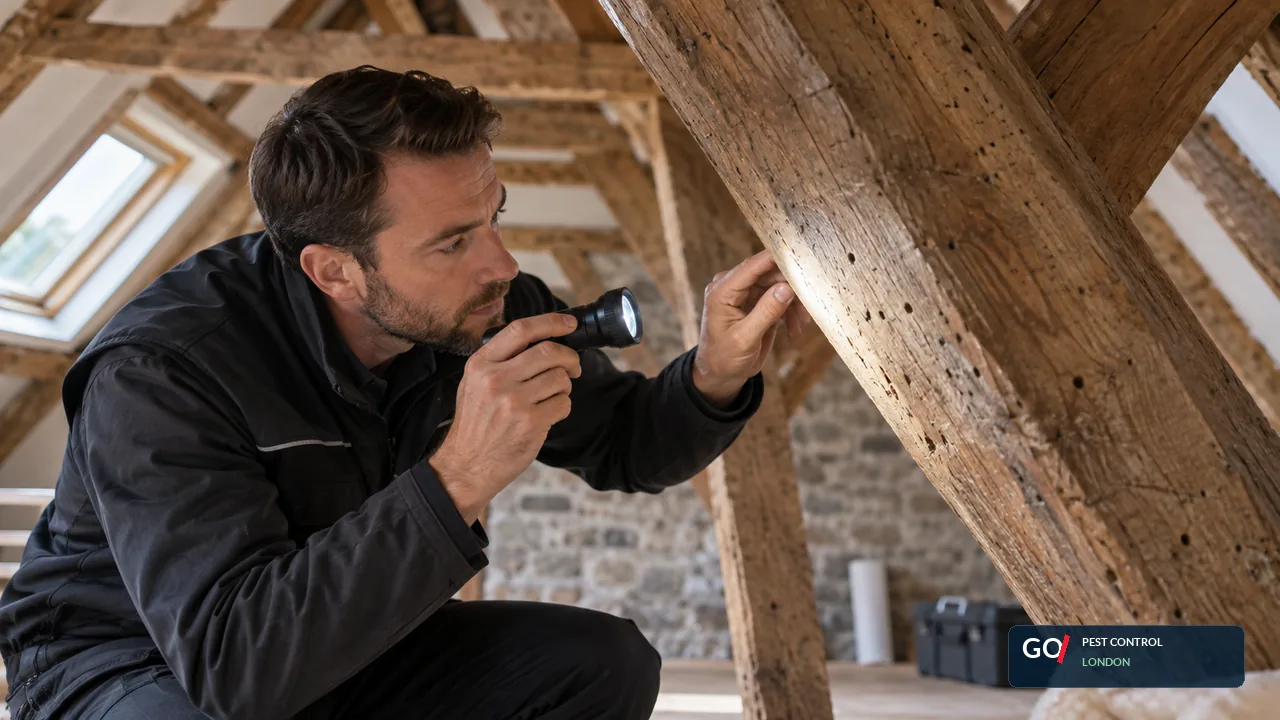
Start with what you know
Small holes in timber may remain for decades after insects have gone. Treatment should be based on signs of current activity, not holes alone.
Why this problem happens
Adult beetles leave exit holes when they emerge. Fresh pale dust, clean hole edges and seasonal beetles can suggest activity. Dark, dusty holes without new debris may be historic.
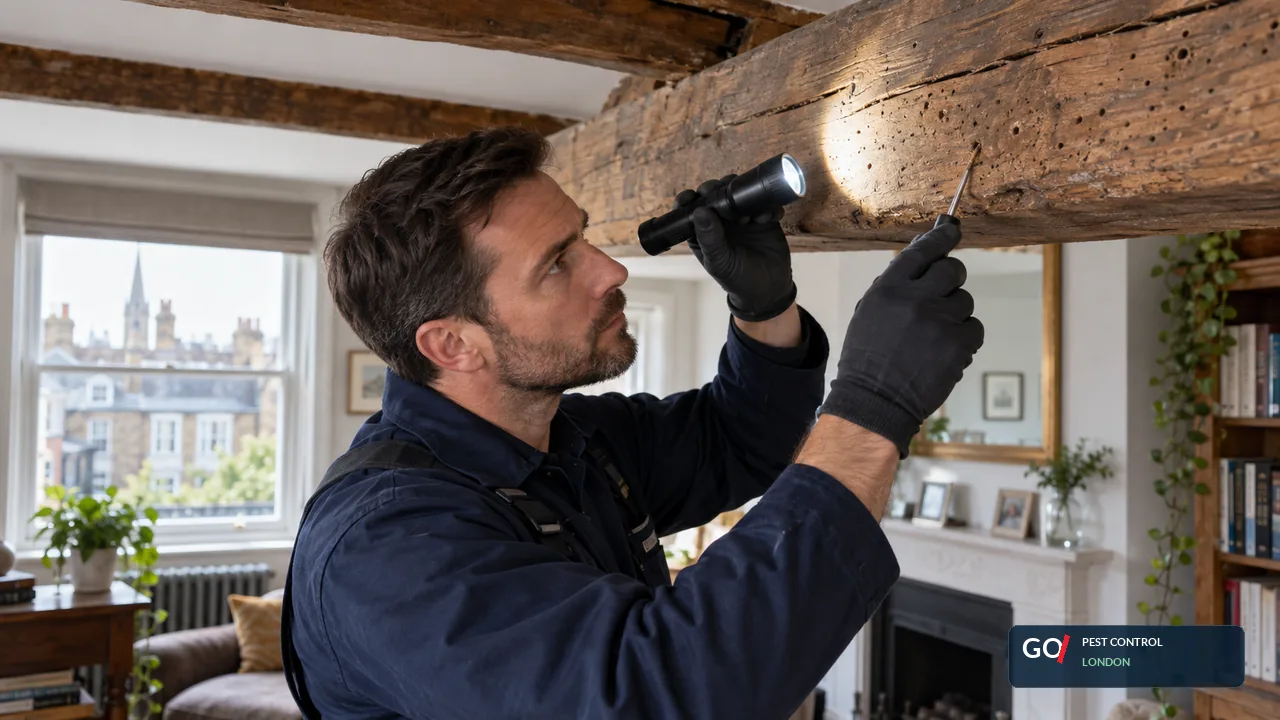
What you can do now
- Photograph the holes and place clean paper beneath the timber to catch fresh dust.
- Check nearby timber for new holes, weak surfaces or live beetles.
- Note moisture problems because damp timber can increase risk.
- Avoid sanding or treating the area before an inspection.
What not to do
Do not coat every timber with insecticide based only on old holes. Structural weakness and moisture need separate assessment.
When to call a professional
Seek a survey when fresh dust returns, beetles appear, structural timber feels weak, or the extent cannot be seen safely.
A useful visit should end with a clear explanation of what was found, what was treated, any limits on access, and the next review point. Ask for the total scope and price before authorising work.
Common questions
Do all holes mean active woodworm?
No. Exit holes remain after activity has ended.
Can painting timber stop woodworm?
No. A surface coating is not a substitute for identification and appropriate treatment.