Dark spotting on bedding or frames
Small ink-like marks may appear around mattress seams, slats, headboards and the edges of established harbourage.
THOROUGH · CALM · METHODICAL
Bed bugs are upsetting, but a clear plan makes the problem manageable. We inspect the places they actually harbour, explain preparation precisely and match the treatment programme to the room and level of activity.
UNDERSTANDING THE PROBLEM
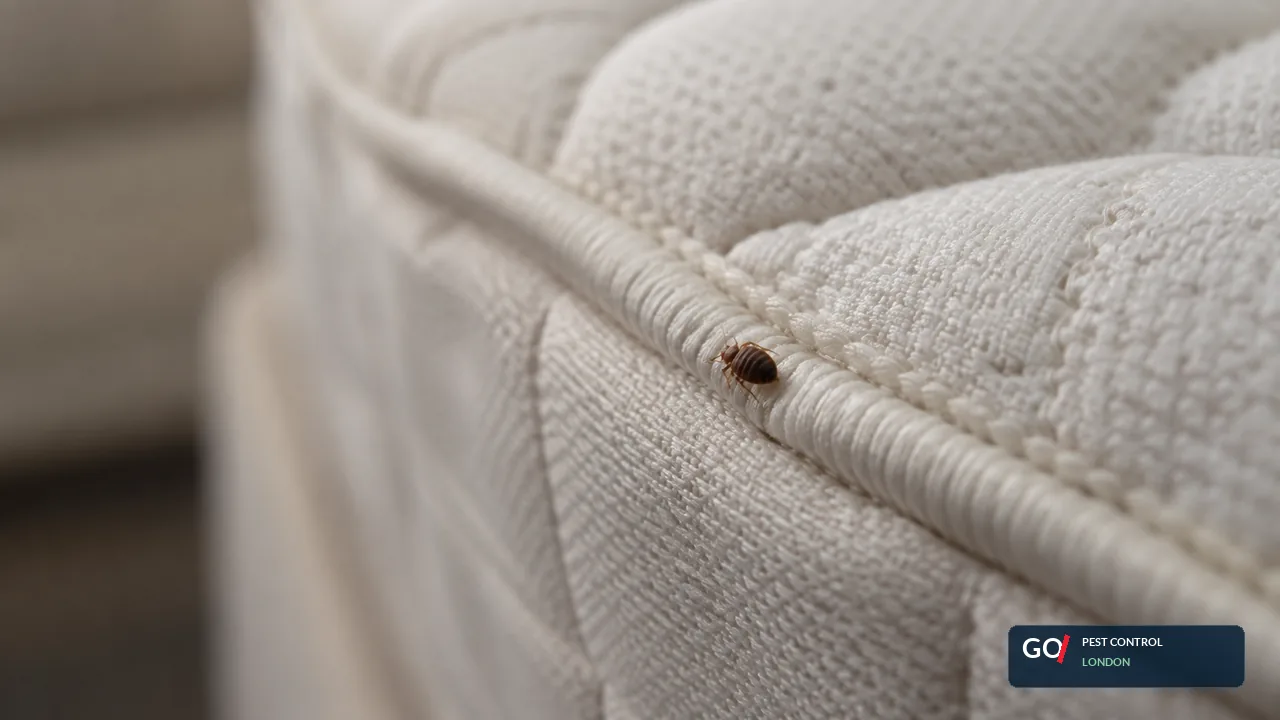
Bed bugs can arrive in luggage, furniture, clothing or belongings and may be introduced to spotless homes, hotels and managed accommodation. They feed briefly, then hide in narrow cracks close to where people rest. The mattress is only one part of the inspection: bed frames, headboards, skirting junctions, bedside furniture and fixings can all provide harbourage. Treating the visible insect while overlooking these sites allows the infestation to continue.
Bites alone cannot confirm bed bugs because skin reactions vary and may appear hours or days later. Some people show no reaction at all. We look for a combination of physical evidence and distribution: live insects, cast skins, dark spotting, eggs and characteristic harbourage. A methodical assessment avoids unnecessary treatment and helps define whether one room or several areas need attention.
WHAT TO LOOK FOR
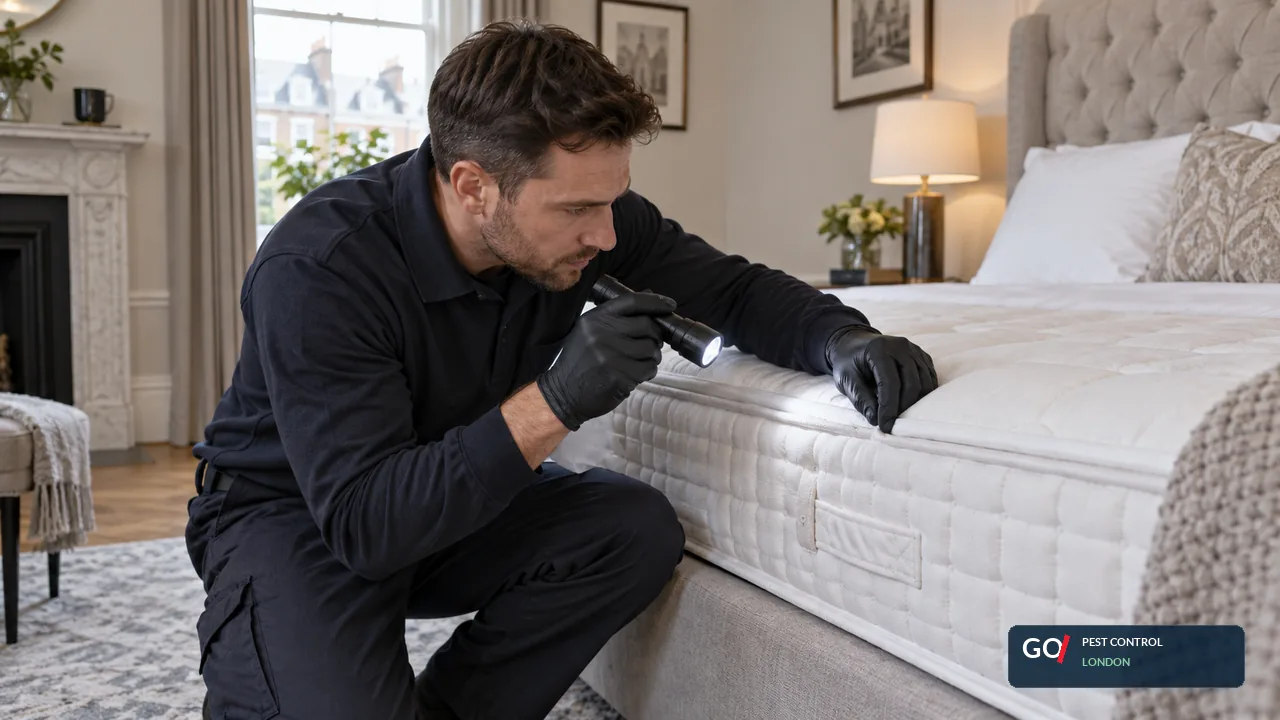
One sign on its own may be inconclusive. A pattern of evidence, location and timing gives a more useful picture.
Small ink-like marks may appear around mattress seams, slats, headboards and the edges of established harbourage.
Translucent shed skins and tiny pale eggs can collect in protected cracks close to sleeping areas.
Adults are flat and reddish-brown, but younger stages are smaller and paler. They often remain concealed during daylight.
Lines or clusters can raise suspicion, but bites are not diagnostic and should be considered alongside physical evidence.
A noticeable odour can occur in heavier infestations, though its absence does not rule out bed bugs.
Recent travel or second-hand furniture can help explain introduction, especially when signs appear near a case or upholstered item.
PROFESSIONAL TREATMENT
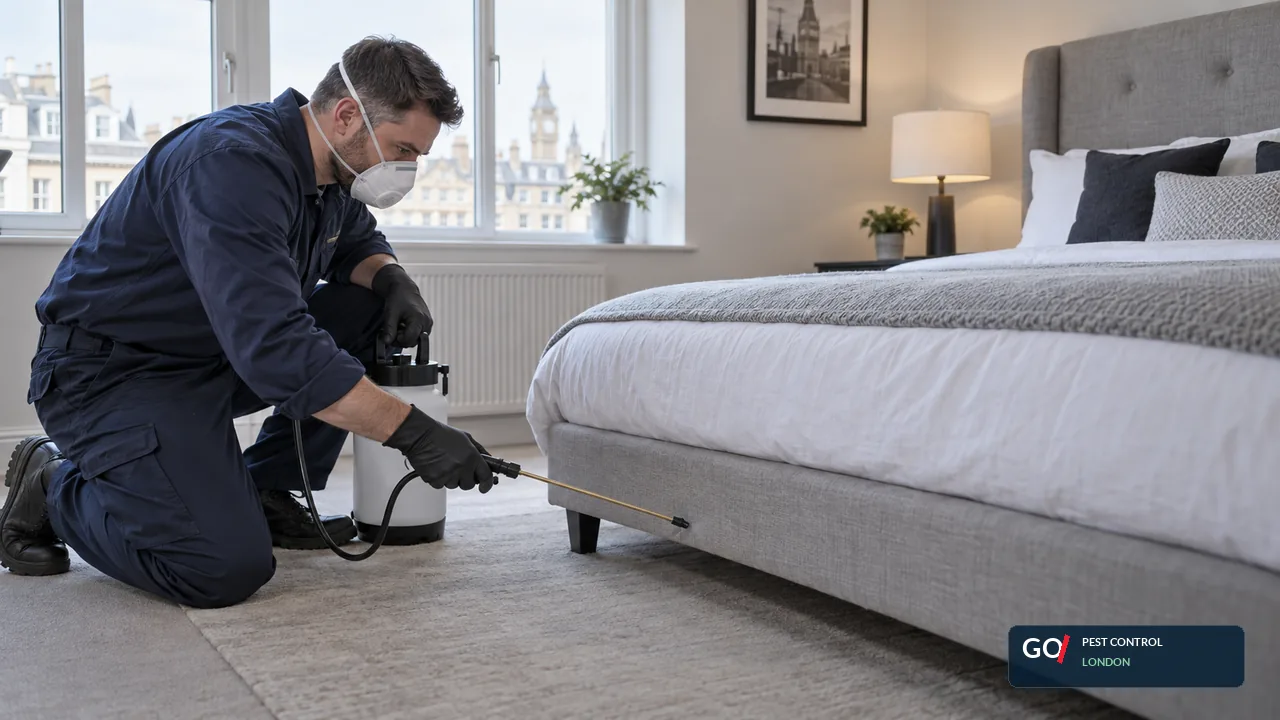
We begin with a focused conversation about sightings, travel, recent furniture and the rooms used for sleeping. During inspection, bedding and furniture are handled carefully to avoid spreading insects. The technician checks seams, joints and nearby cracks, then explains the evidence and the area that should be treated. Preparation is kept specific: indiscriminate clearing can move bed bugs into new hiding places, so follow the instructions supplied for your booking.
Treatment may combine targeted residual products, contact methods, monitoring and, where appropriate, specialist heat options. No single method is right for every property. Follow-up timing reflects the possibility of newly hatched insects and helps confirm whether activity is declining. You will receive practical re-entry, laundering and monitoring advice, including what not to spray or move between rooms.
HOW IT WORKS
Share the location, timing and signs. Photographs can help when they can be taken safely.
We assess the evidence, explain the recommended treatment and confirm the quotation.
Work is completed with practical aftercare, monitoring and prevention advice for your property.
CLEAR GUIDE PRICE
Our existing guide price is based on a bedroom treatment plan. The final quote depends on the number of affected rooms, evidence found, preparation, chosen method and follow-up required.
Starting prices are a guide. Your confirmed quote may vary with property size, access, extent of activity, preparation and the visits required. No work begins without your approval.
PRACTICAL PREVENTION
Keep belongings in the affected room unless the technician instructs otherwise. Moving loose items to a clear bedroom can transport hidden insects. Launder or heat-treat suitable textiles as directed, transport them in closed bags and store clean items separately. Vacuuming can support preparation, but the vacuum contents must be sealed and removed safely.
When travelling, inspect the luggage rack and bed area before unpacking, keep cases away from the bed and examine luggage on return. Be cautious with used beds and upholstered furniture. In managed accommodation, early reporting is especially valuable because adjoining rooms may need assessment. Mattress encasements and monitors can assist a wider plan, but they do not replace professional treatment of established harbourage.
WHY GO PEST CONTROL
We do not rely on bites alone; the technician looks for physical signs and maps likely harbourage.
Instructions are proportionate to the selected method, reducing unnecessary work and accidental spread.
The programme accounts for eggs and newly emerged insects rather than judging success immediately after one visit.
Appointments are handled carefully for private homes, rentals, hotels and staff accommodation.
You receive direct advice on re-entry, ventilation, textiles, children and pets where relevant.
We explain why repeat treatment may be required and what progress should look like between visits.
CUSTOMER EXPERIENCE
“The bed bug treatment was organised clearly from the first call. We knew how to prepare, what would happen on the day and what to do afterwards.”
RELATED SERVICES
COMMON QUESTIONS
Clear answers before you book. Call us if the situation at your property is unusual.
No. Reactions differ and other causes can look similar. Physical evidence from a careful inspection is the reliable basis for identification.
Usually not. Disposal can spread insects through the building and may be unnecessary. Wait for an inspection before deciding what must be removed.
Preparation depends on the selected treatment. We provide a clear list covering bedding, clothing, access and cleaning; avoid moving items to other rooms without advice.
A follow-up programme is often required because eggs may survive the first intervention. The number and timing of visits depend on the method and evidence.
Yes. They may harbour in bedside furniture, skirting gaps, picture fixings, sofas and adjoining areas, particularly as an infestation develops.
Treatments are chosen for the room and used according to their label. We explain re-entry times and any precautions for children, pets or vulnerable occupants.
Usually this is discouraged because it can draw activity into a new area. Continue using the room unless your technician gives different safety advice.
Yes. We can coordinate access, preparation and monitoring with managers, landlords or occupants while keeping communication clear and discreet.
Tell us what you have found and we will explain the sensible next step.