A concentrated flight path
Numerous wasps entering and leaving the same gap every few seconds are a strong indication of an active nest entrance.
SAFE NEST ASSESSMENT
A busy wasp flight path near a roof, wall cavity or garden structure needs safe assessment. We identify the likely nest entrance, consider access and treat the colony without encouraging risky DIY disturbance.
UNDERSTANDING THE PROBLEM
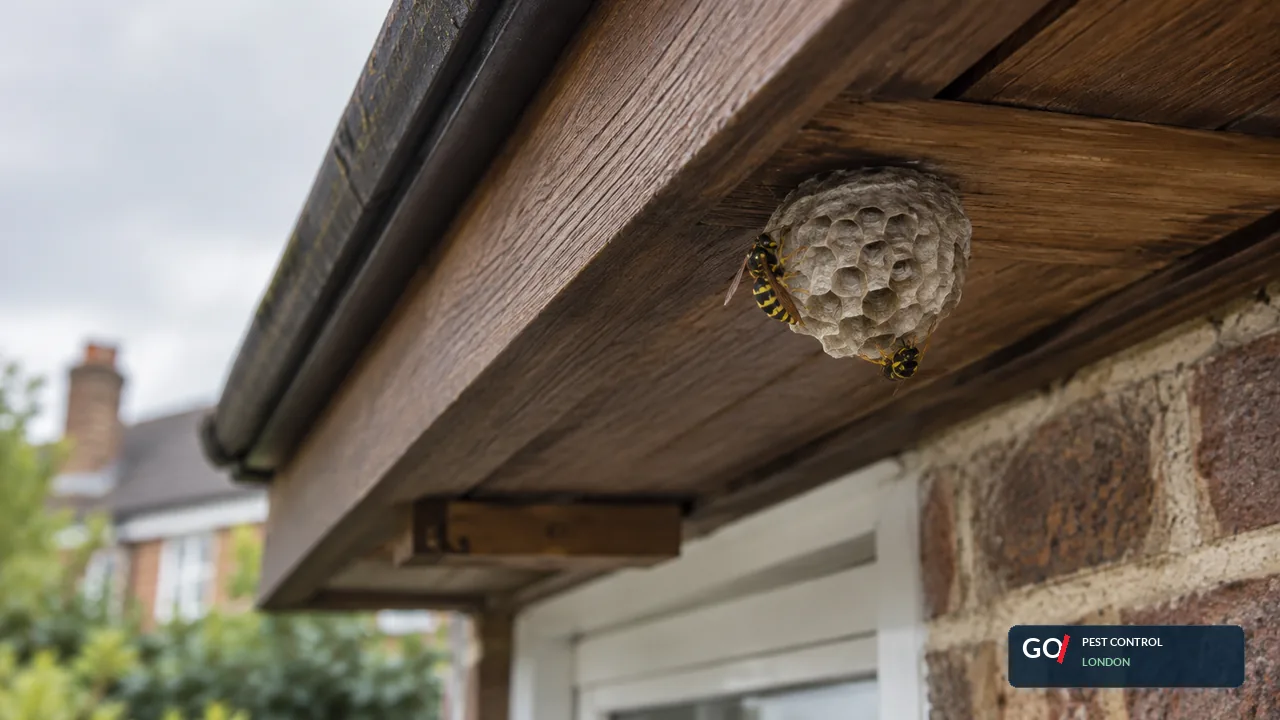
Wasps repeatedly entering one point beneath tiles, through a brick vent or under shed felt usually indicate a nearby nest. The paper nest may be visible, but colonies are also built inside roof voids, wall cavities and dense vegetation. Blocking the entrance is not a safe solution: active wasps may find another route, including into the occupied part of the building. Disturbance close to a busy entrance can trigger defensive behaviour.
The right response depends on the species, the stage of the season and the nest location. Wasps can be beneficial predators away from people, so treatment should be justified by risk and use of the area. A nest beside a bedroom window, customer entrance or children’s play space presents a different problem from distant activity at the bottom of a garden. We assess the situation and explain whether treatment is appropriate.
WHAT TO LOOK FOR
One sign on its own may be inconclusive. A pattern of evidence, location and timing gives a more useful picture.
Numerous wasps entering and leaving the same gap every few seconds are a strong indication of an active nest entrance.
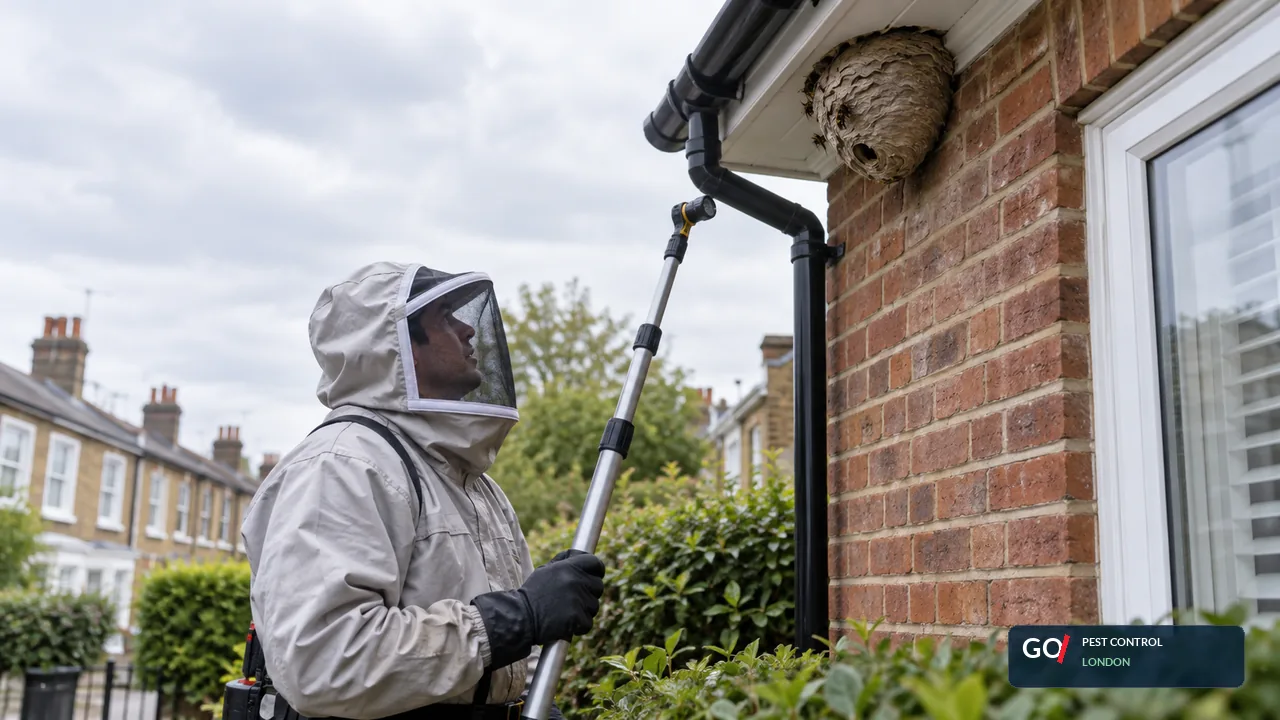
A grey or brown layered structure may be visible beneath eaves, inside a shed or among sheltered branches.
A faint, persistent rustling or buzzing can sometimes be heard through a ceiling or wall close to a concealed colony.
Repeated indoor sightings near one window or light fitting may mean the nest is close to the building fabric.
Wasps collect wood fibres for nest construction, leaving pale scrape marks on fences, sheds or garden furniture.
Colonies are larger later in the season and workers may become more noticeable around sweet food, bins and outdoor dining.
PROFESSIONAL TREATMENT
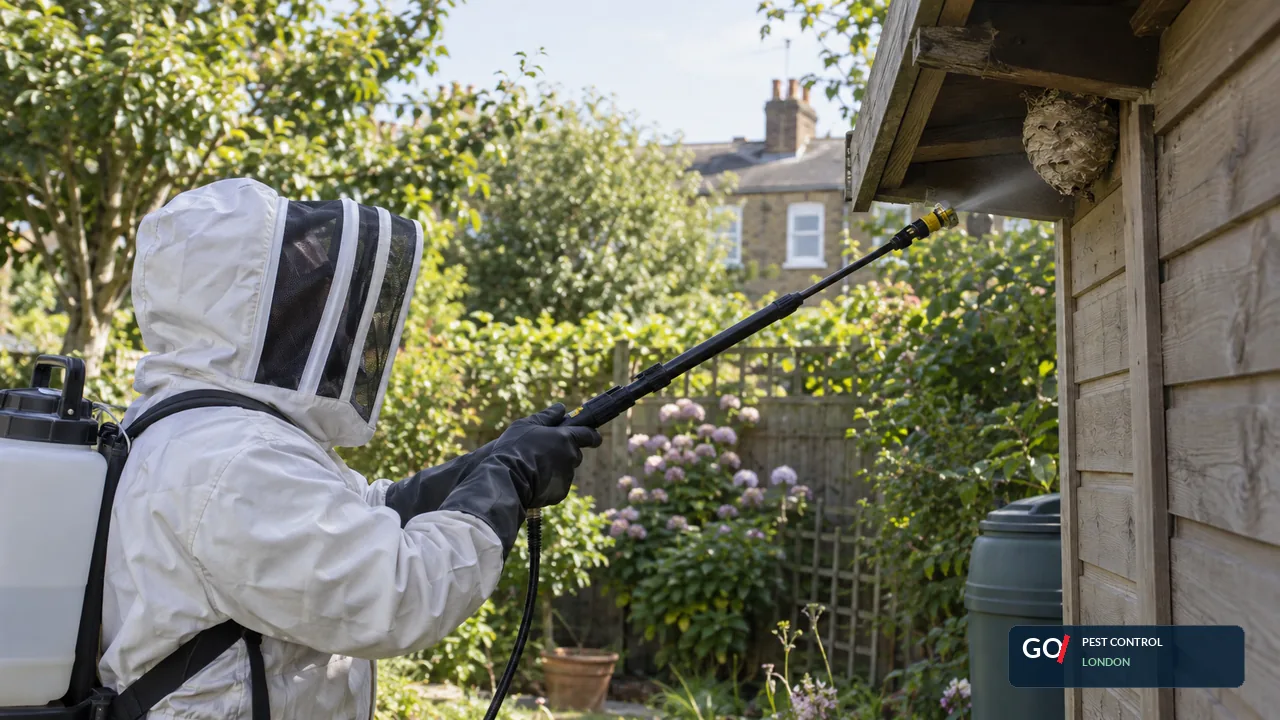
Before attending, we ask where the activity is located, the approximate height and whether the entrance can be reached from your property. On site, the technician observes the flight line from a safe position and checks that the activity is wasp rather than bee related. Access is assessed before any equipment is set up; ladders or extension systems are used only where conditions permit safe working.
Treatment is applied to the nest or established entrance using a method suited to its location. Wasps returning to the colony help carry the treatment into concealed areas. Activity does not always stop instantly, so the technician explains the normal decline and the point at which you should contact us again. We do not routinely open walls or remove a hidden paper nest after the colony has been resolved, because the old nest is not reused and invasive building work is rarely necessary.
HOW IT WORKS
Share the location, timing and signs. Photographs can help when they can be taken safely.
We assess the evidence, explain the recommended treatment and confirm the quotation.
Work is completed with practical aftercare, monitoring and prevention advice for your property.
CLEAR GUIDE PRICE
Our existing guide price applies to an accessible wasp nest. The confirmed quote reflects the nest position, height, safe working access, number of nests and any specialist equipment required.
Starting prices are a guide. Your confirmed quote may vary with property size, access, extent of activity, preparation and the visits required. No work begins without your approval.
PRACTICAL PREVENTION
Do not seal a hole while wasps are travelling through it. Once activity has ended, repair loose soffits, damaged vents and obvious gaps where practical. Fit sound insect mesh to suitable ventilation openings without restricting airflow. Sheds and lofts benefit from routine spring inspections, when an early nest may be much smaller and easier to identify.
Keep external bins closed and remove food residues around outdoor dining areas. Fallen fruit and sweet drinks can attract foraging workers even when the nest is elsewhere, so reducing these sources improves day-to-day comfort. Artificial nests and general surface sprays are not reliable substitutes for repairing access points or treating a confirmed colony.
WHY GO PEST CONTROL
The technician considers height, access, occupants and the surrounding area before starting treatment.
We distinguish wasp activity from bees and other insects so that the response is appropriate.
Protective clothing and purpose-designed application equipment allow controlled treatment from a safer position.
You know how long residual activity may continue and which changes would justify a follow-up call.
We attend houses, flats, shops, hospitality premises, schools and managed outdoor spaces across London.
Concealed nests can usually be treated through their entrance without opening a ceiling or wall.
CUSTOMER EXPERIENCE
“The wasp nest was dealt with promptly and safely. The technician was courteous, explained the process and left everything tidy.”
RELATED SERVICES
COMMON QUESTIONS
Clear answers before you book. Call us if the situation at your property is unusual.
Watch from a safe distance. A steady stream entering and leaving one precise gap is more meaningful than wasps feeding around flowers or bins.
No. Blocking an active entrance can make wasps search for another route and may drive them into the building. Treat the colony before proofing.
Activity normally reduces over a period rather than ending immediately. The technician will explain the expected timescale for the nest position and method used.
Visible, accessible nests may be removed when appropriate, but a concealed old nest usually causes no problem and is not reused. Opening building fabric is rarely justified.
Many elevated entrances can be reached with professional extension equipment. We confirm safe access on site and explain alternatives where specialist access is required.
Do not disturb them. Identification matters, and bee colonies may require a beekeeper or a different approach. Send a clear photograph if it can be taken safely.
We define a safe working area and explain when it can be used again. Keep people and animals away from the nest and equipment during treatment.
An old paper nest is not reused, although a sheltered property may attract a new queen nearby. Repairing suitable access gaps after activity ends can reduce the opportunity.
Tell us what you have found and we will explain the sensible next step.