Visible activity
Small buff-coloured moths avoiding light.
PROFESSIONAL · DISCREET · RESPONSIVE
Textile moth larvae can damage wool, cashmere and natural-fibre carpets while the adults remain unobtrusive. We distinguish the species, map vulnerable materials and target the source.
UNDERSTANDING THE PROBLEM
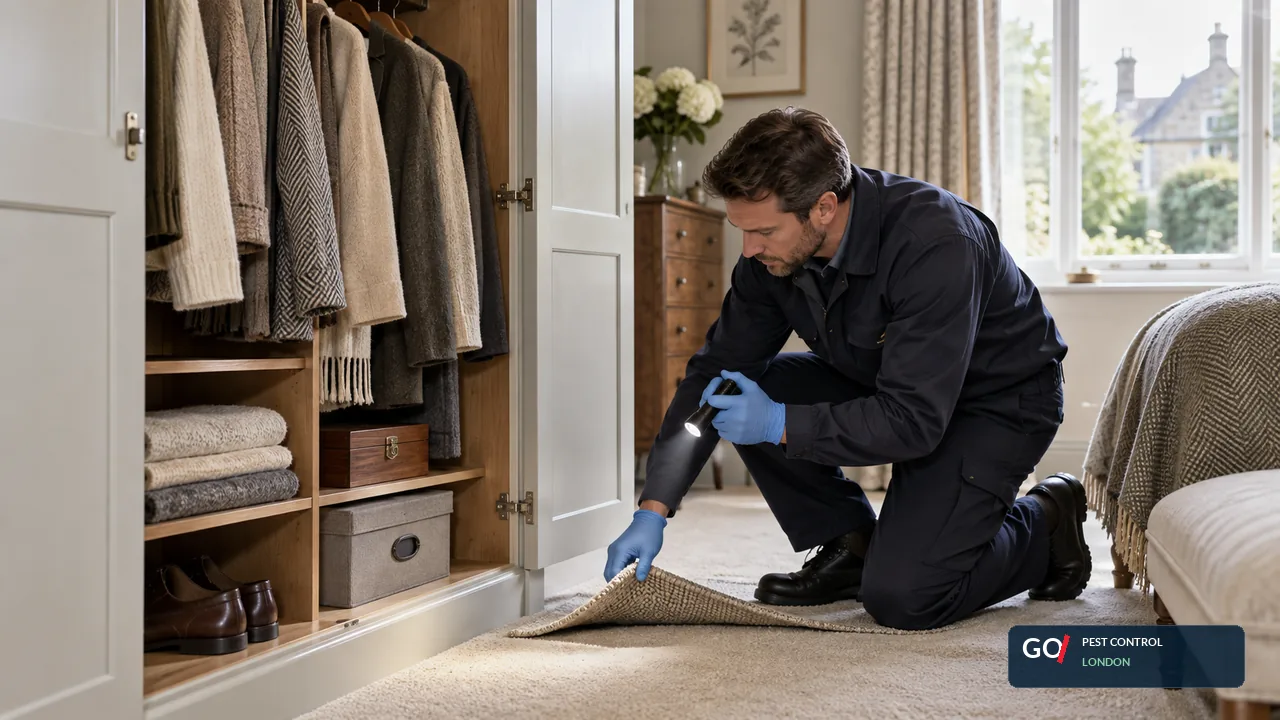
The adult moth does not eat fabric; damage is caused by larvae feeding in quiet, dark areas. Sticky traps help monitor adults but cannot remove eggs and larvae already within textiles or floor edges.
Wardrobes, carpet borders, upholstered furniture and stored blankets offer undisturbed natural fibres. Lint and pet hair beneath heavy furniture can sustain activity away from the obvious garment damage.
SIGNS TO CHECK
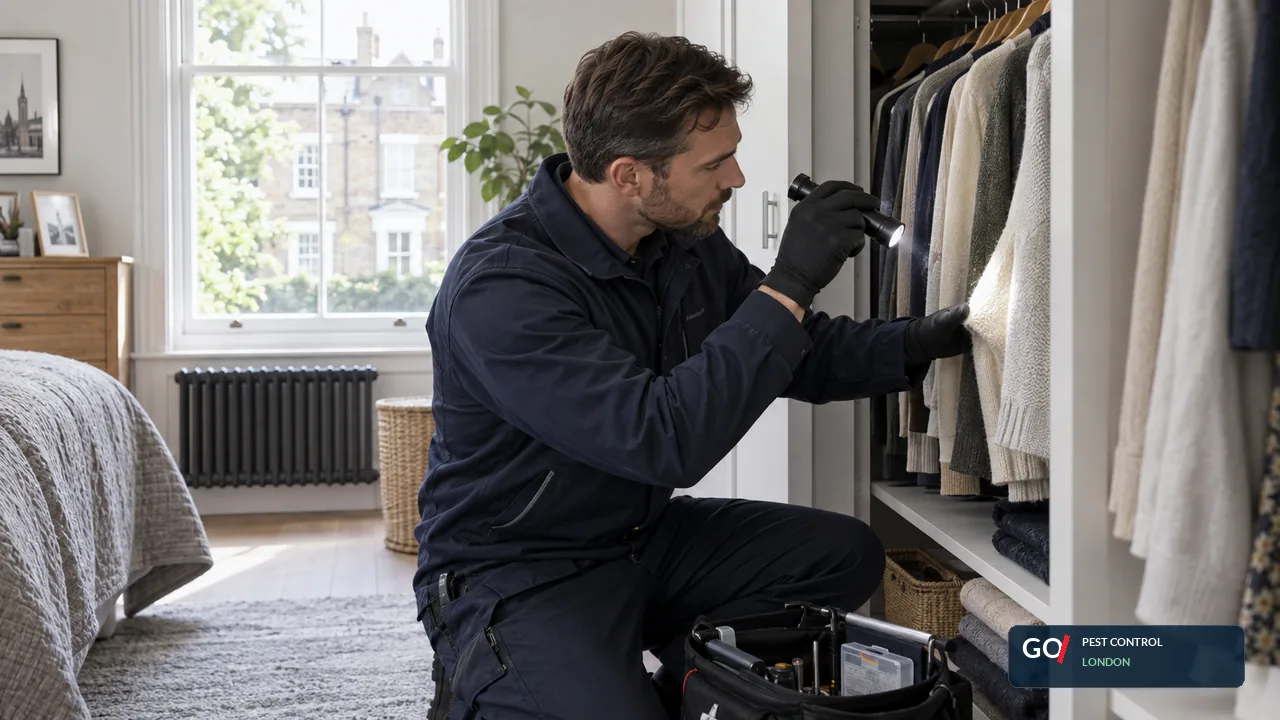
The location, age and pattern of these signs are more useful than one isolated sighting.
Small buff-coloured moths avoiding light.
Silken tubes or webbing on fabric.
Irregular holes in wool or cashmere.
Pale larvae in folds and carpet edges.
Loose fibres or bald patches beneath furniture.
Repeated trap catches in one room.
INSPECTION & TREATMENT
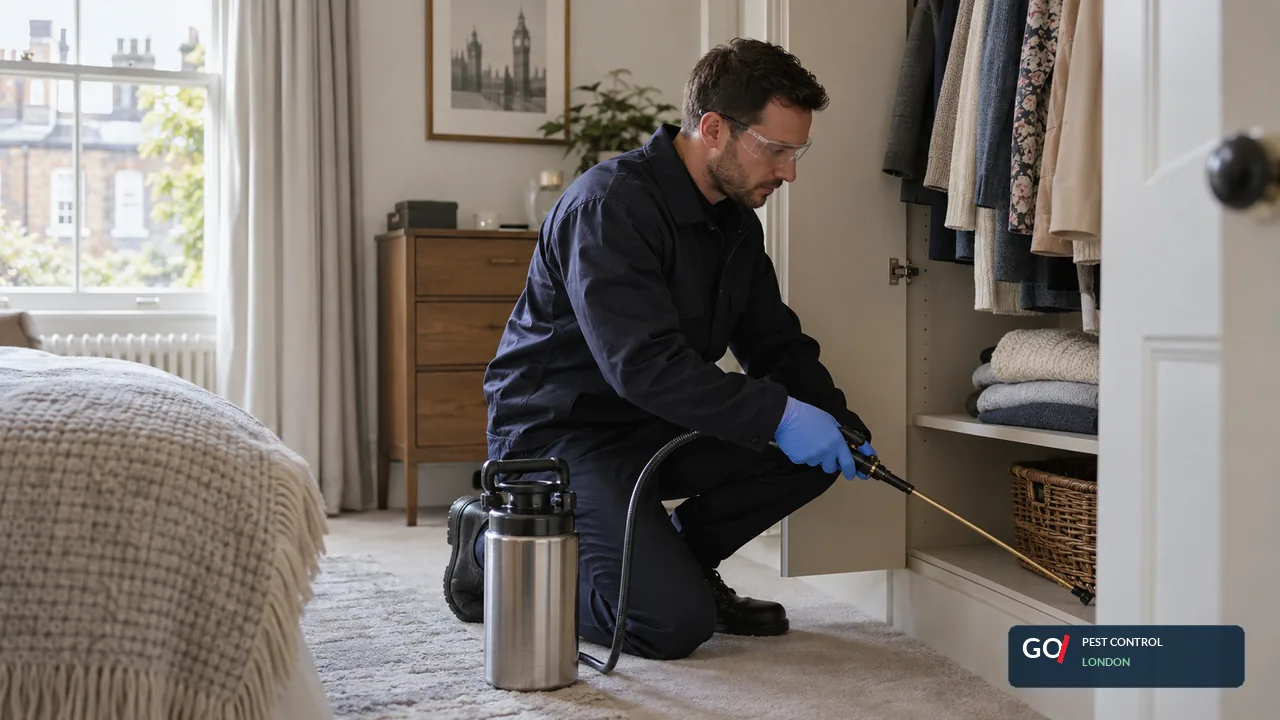
We begin with what has been seen, when it occurs and how the affected space is used. The technician then follows the evidence to likely harbourage, access and contributing conditions. This avoids treating only the most visible symptom while leaving the source untouched.
The recommended programme uses inspection, monitoring and targeted treatment of textiles and hidden harbourage. Equipment and products are selected for the setting, with clear guidance for residents, pets, staff and customers. Where follow-up is required, we explain its purpose and the evidence used to judge progress.
HOW IT WORKS
Tell us what you found, where it occurred and whether the pattern is changing.
We identify the source, explain the options and confirm the quotation before work.
The work is completed with proportionate aftercare, monitoring and prevention advice.
CLEAR PRICING
Every property and level of activity is different. The quotation confirms the proposed method, likely visits, preparation and any separate proofing or access requirements.
Published starting prices are a guide. No work begins without your approval.
PREVENTION
Clean garments before storage, use sealed breathable containers, vacuum carpet edges and inspect natural fibres seasonally. Rotate stored items and avoid relying on cedar or fragrance products as a treatment for active larvae.
Prevention works best when it responds to evidence from the property. We prioritise the few repairs or housekeeping changes most likely to make a difference, rather than handing you a generic checklist. If building management or a neighbouring unit needs to be involved, we explain why.
WHY GO PEST CONTROL
Recommendations are based on pest signs, access and property conditions.
Appointments are handled carefully in homes and customer-facing premises.
Treatment is selected for the setting with practical safety guidance.
You know what we found, what we recommend and what happens next.
We understand shared voids, conversions, commercial units and restricted access.
Advice focuses on specific changes relevant to the inspected property.
CUSTOMER EXPERIENCE
“The bed bug treatment was organised clearly from the first call. We knew how to prepare, what would happen on the day and what to do afterwards.”
RELATED SERVICES
COMMON QUESTIONS
Clear answers before you book. Call if the circumstances at your property are unusual.
We assess the physical evidence, its distribution and the conditions around it. Photographs may help initially, but an on-site inspection is recommended where identification or the extent of activity remains uncertain.
The plan reflects the pest or damage, property use, access, safety and likely source. For this service, the core approach is inspection, monitoring and targeted treatment of textiles and hidden harbourage. We explain the recommendation before work starts.
We select methods for the setting and provide clear preparation, exclusion and re-entry instructions. Tell us about children, pets, allergies or vulnerable occupants when booking.
Some situations can be resolved in one appointment; others require monitoring or follow-up. The quotation sets out the expected programme and what progress should look like.
Avoid disturbing important evidence or applying household pesticides. Make the affected area safely accessible and follow any service-specific preparation sent with your booking.
Yes. We attend offices, shops, managed buildings, hospitality and other workplaces, planning access and documentation around the operation where possible.
No responsible company can promise that pests will never return. We address current activity and identify practical changes that reduce the opportunity for recurrence.
The final price reflects access, affected area, evidence, treatment method and visits required. You receive a clear quotation before work begins; no additional work is carried out without approval.
Tell us what you have noticed and we will explain the sensible next step.