Droppings and smear marks
Small dark droppings, often concentrated behind appliances, in cupboards or along established runs. Greasy rub marks may appear where mice repeatedly brush against a surface.
DISCREET RODENT CONTROL
Small gaps, shared walls and hidden service routes make mice difficult to resolve with traps alone. We identify where activity is centred, treat it methodically and show you how to make the property less inviting.
UNDERSTANDING THE PROBLEM
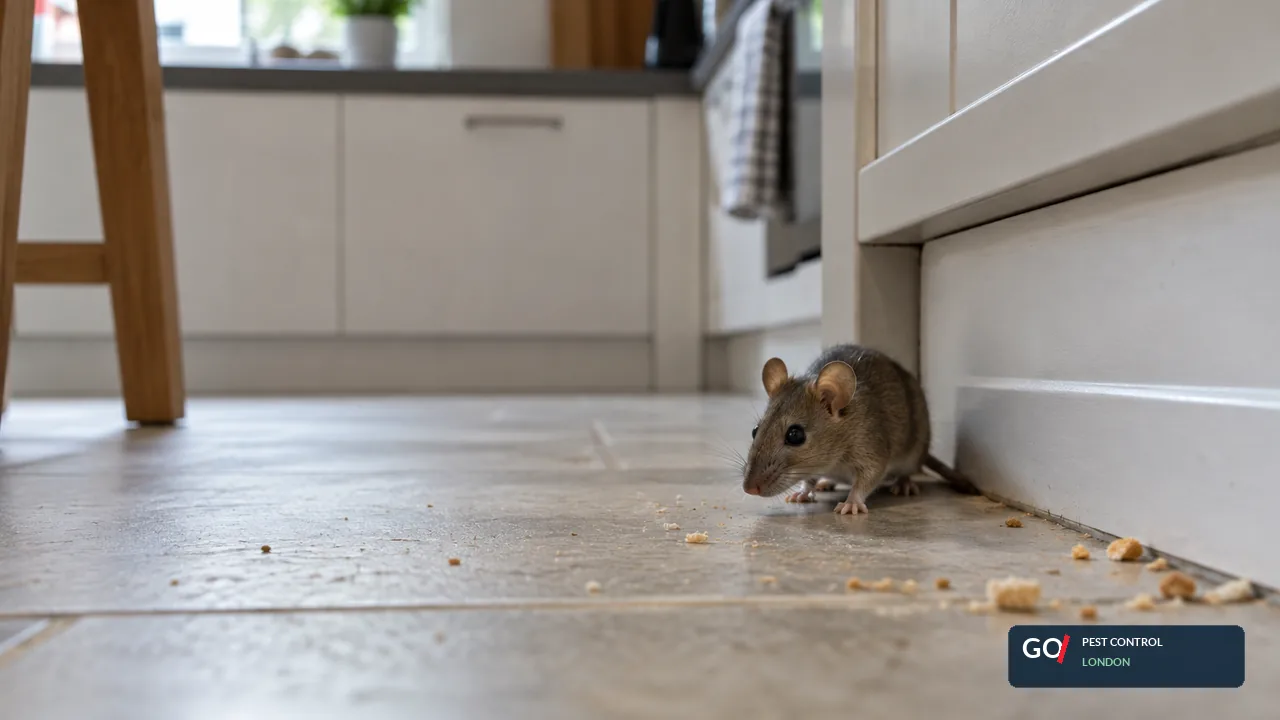
A mouse can pass through a gap little wider than a pencil. In London terraces, converted flats and commercial buildings, pipe runs and shared voids can link several rooms or properties without an obvious opening in the living space. That is why activity may continue even after a few visible mice have been caught. Effective control starts by understanding how the animals are moving, what food or nesting material is available and whether the problem extends beyond one room.
Mice are cautious but adaptable. They often travel along edges, behind kitchen units and inside boxed-in services, emerging when the building is quiet. Contaminated food, gnawed packaging and damage to cables are practical concerns, while droppings and urine can affect hygiene. Our approach is calm and proportionate: confirm the signs, focus treatment where it will work and avoid scattering control points without a plan.
WHAT TO LOOK FOR
One sign on its own may be inconclusive. A pattern of evidence, location and timing gives a more useful picture.
Small dark droppings, often concentrated behind appliances, in cupboards or along established runs. Greasy rub marks may appear where mice repeatedly brush against a surface.
Light scratching, scurrying or movement in ceilings, partition walls and beneath floors is often most noticeable late at night.
Fresh tooth marks, shredded paper, damaged packets and crumbs in unusual places can indicate an active feeding or nesting area.
A persistent stale smell, together with finely shredded fabric, paper or insulation, can point to a concealed harbourage.
Cats and dogs may watch a cupboard, appliance gap or wall void before people notice any other evidence.
A mouse seen during the day can suggest pressure on food or shelter, or a larger population competing for space.
PROFESSIONAL TREATMENT
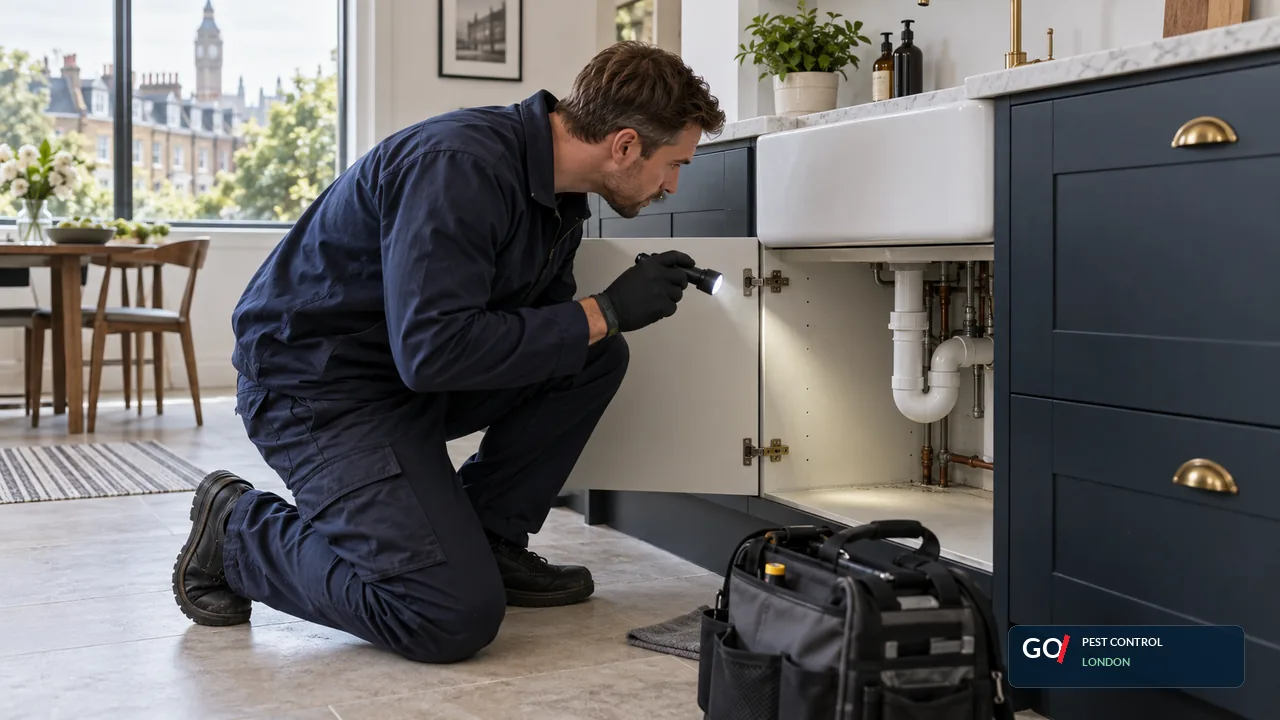
The technician begins with the history of the problem: where and when you have seen activity, whether food has been disturbed and which parts of the building connect to kitchens, stores, basements or neighbouring premises. Inspection then follows likely runs rather than simply looking in the room where a mouse was spotted. Gaps around pipes, damaged air bricks, door thresholds and service cupboards are checked alongside droppings and feeding signs.
A treatment plan may use secured control points, monitoring devices and carefully positioned traps according to the property and risk. We explain where equipment is placed and the precautions needed around children, pets, staff or tenants. Follow-up is important because it shows whether activity is falling and whether mice are approaching from another route. Proofing is recommended at the appropriate stage: sealing too early can divert active mice deeper into the building, while delaying indefinitely leaves the route open.
HOW IT WORKS
Share the location, timing and signs. Photographs can help when they can be taken safely.
We assess the evidence, explain the recommended treatment and confirm the quotation.
Work is completed with practical aftercare, monitoring and prevention advice for your property.
CLEAR GUIDE PRICE
Our existing guide price covers a professional rodent treatment plan. The confirmed quotation reflects the level of activity, property layout, access points, monitoring needs and number of visits recommended.
Starting prices are a guide. Your confirmed quote may vary with property size, access, extent of activity, preparation and the visits required. No work begins without your approval.
PRACTICAL PREVENTION
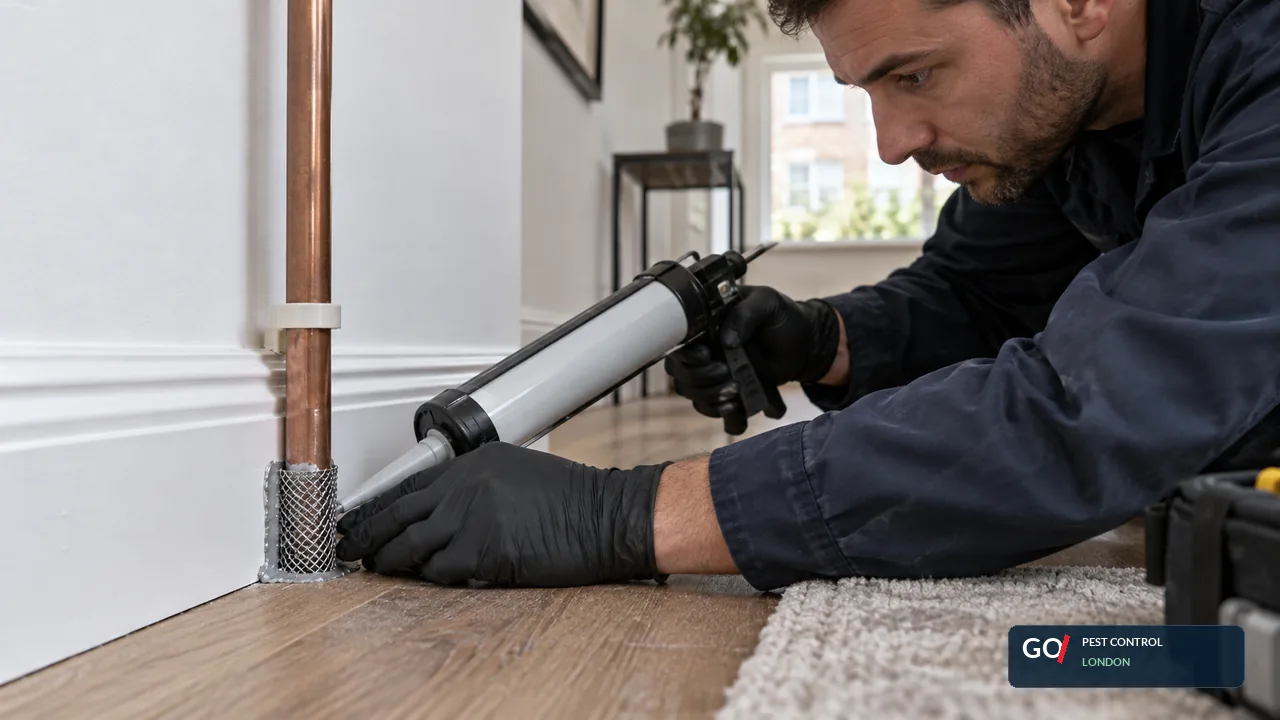
Store dry goods and pet food in durable containers, clear crumbs beneath appliances and avoid leaving food waste accessible overnight. These steps do not replace treatment, but they reduce alternative food sources and make monitoring more informative. Check low-level pipe penetrations, gaps beneath external doors and damaged vents; a tidy-looking hole can still be large enough for a mouse.
Proofing should use materials suited to the location. Foam alone is easily gnawed, while a combination of mesh, suitable sealant and sound building repair is more durable. In shared buildings, speak with the managing agent where routes cross communal risers, bin stores or adjacent flats. We prioritise the changes most likely to matter rather than giving you a generic list of jobs.
WHY GO PEST CONTROL
We base the plan on evidence of movement and access, not on a one-size-fits-all number of bait points.
Equipment is placed carefully and visits are handled professionally in homes, rentals and customer-facing premises.
You know what has changed between visits, what remains active and when proofing should be completed.
Control methods are chosen for the setting, with straightforward instructions for residents, pets and staff.
We understand shared voids, basement routes, conversions and the practical limits of access in the capital.
Advice focuses on specific gaps, storage and waste issues found at your property.
CUSTOMER EXPERIENCE
“A stressful rat problem was handled with reassuring, practical advice. The team treated the issue and showed us how to reduce the chance of it returning.”
RELATED SERVICES
COMMON QUESTIONS
Clear answers before you book. Call us if the situation at your property is unusual.
Mouse droppings are usually smaller and the noises tend to be lighter, but photographs and context are more reliable than size alone. Tell us where the evidence was found and we will help establish the likely species.
They may catch individual mice, but results are inconsistent if the main access route, nesting area or competing food source remains. An inspection-led plan addresses the pattern of activity.
The technician selects and positions equipment for the property and explains all precautions. Never move or open a professional control point.
That depends on the scale of activity, building layout and whether access routes can be addressed. The expected programme is explained before treatment begins.
Not always. Closing routes while mice are still active may redirect them. We identify priority openings and advise on the safest sequence for treatment and proofing.
Yes. Service risers, pipe chases, floors and wall voids can connect different parts of a converted or purpose-built block. Management involvement may be helpful.
Avoid deep-cleaning droppings or moving appliances unless asked, as evidence can help the inspection. Secure food and make relevant cupboards safely accessible.
Yes. We plan rodent work around the operation, hygiene requirements and documentation needs, with discreet scheduling where possible.
Tell us what you have found and we will explain the sensible next step.