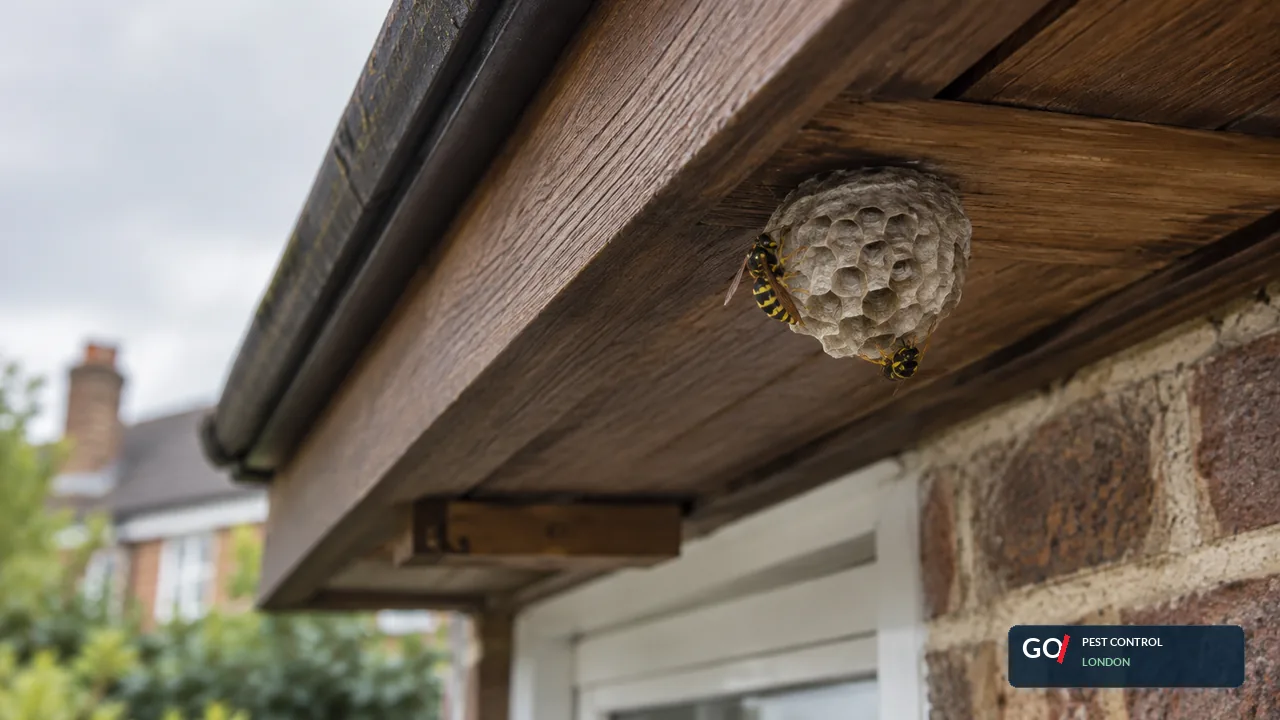
Start with what you know
A few wasps feeding on flowers do not mean there is a nest on the property. A nest is more likely when many wasps repeatedly enter the same gap.
Why this problem happens
Common nest sites include roof edges, wall cavities, sheds and soil. The visible entrance may be some distance from the nest itself. Blocking it can force wasps into the building.
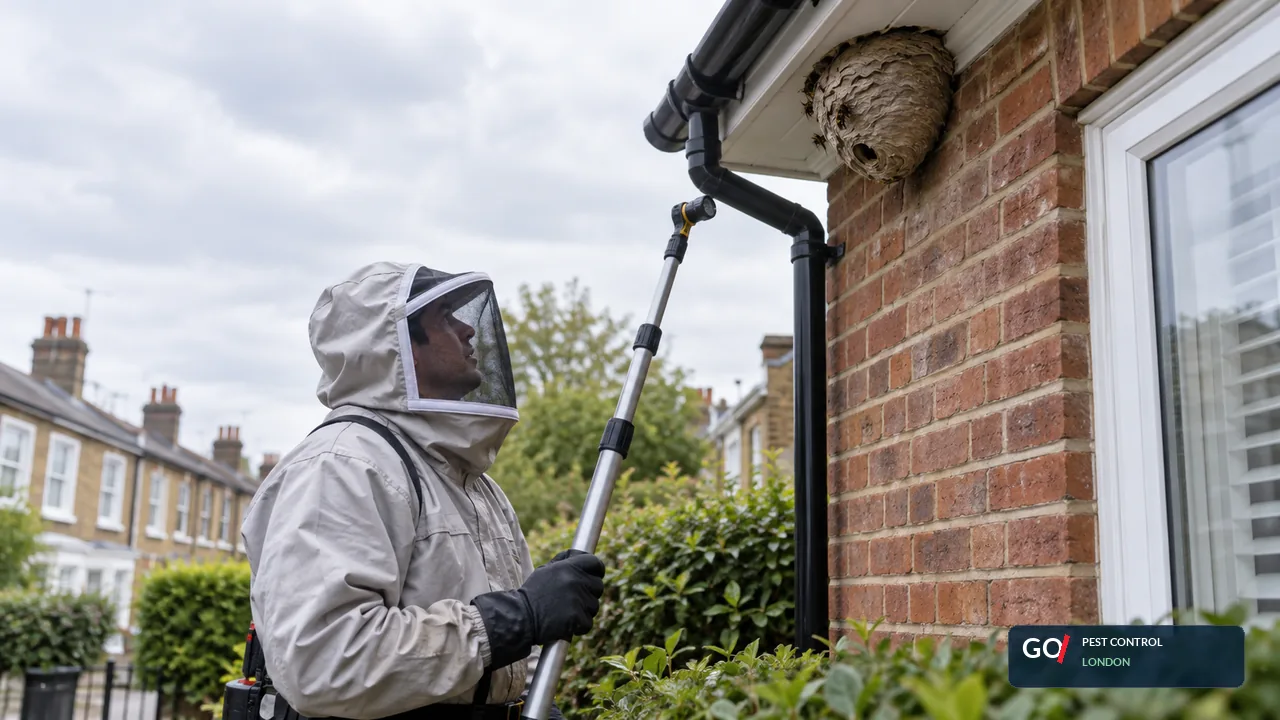
What you can do now
- Watch from a safe distance and note the repeated flight line.
- Keep children and pets away from the entrance.
- Close nearby windows if wasps are entering occupied rooms.
- Tell the technician whether anyone has a known severe allergy.
What not to do
Do not climb a ladder, spray into a hidden void or seal the entrance. Disturbed wasps can defend the nest, and DIY access may create a fall risk.
When to call a professional
Seek professional help when the entrance is close to doors, play areas or occupied rooms, when wasps enter indoors, or when safe treatment requires height equipment.
A useful visit should end with a clear explanation of what was found, what was treated, any limits on access, and the next review point. Ask for the total scope and price before authorising work.
Common questions
Should every wasp nest be removed?
Not always. A remote nest may be left alone if it presents little risk.
Can I block the entrance at night?
No. Wasps may find another route, including into the property.