Start with what you know
Wiping away ants gives short-term relief, but the colony remains. Better results come from finding the trail, reducing food and using the correct treatment for the species.
Why this problem happens
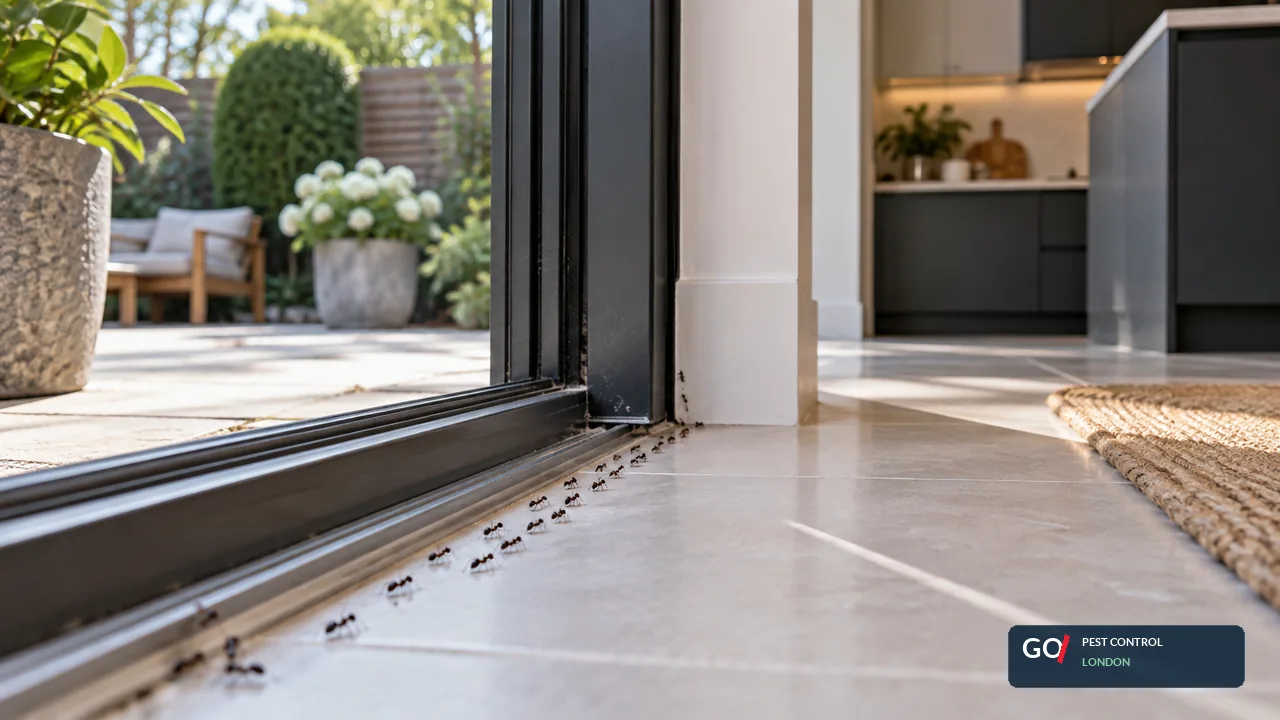
Worker ants follow chemical trails between food and the nest. The entry point may be beneath a door, around a pipe or through a tiny crack. Some indoor species need specialist identification and a coordinated baiting plan.
What you can do now
- Clean food spills and keep sugar, pet food and fruit covered.
- Follow the trail before wiping it away and note the entry point.
- Photograph the ants closely or keep a sample for identification.
- Keep surfaces dry and empty indoor bins regularly.
What not to do
Do not spray directly over a bait placement or mix several products. Repellent spray can disrupt trails and reduce the effectiveness of colony bait.
When to call a professional
Call when ants persist after food is removed, emerge from several rooms, or appear throughout a block. Correct species identification prevents wasted treatment.
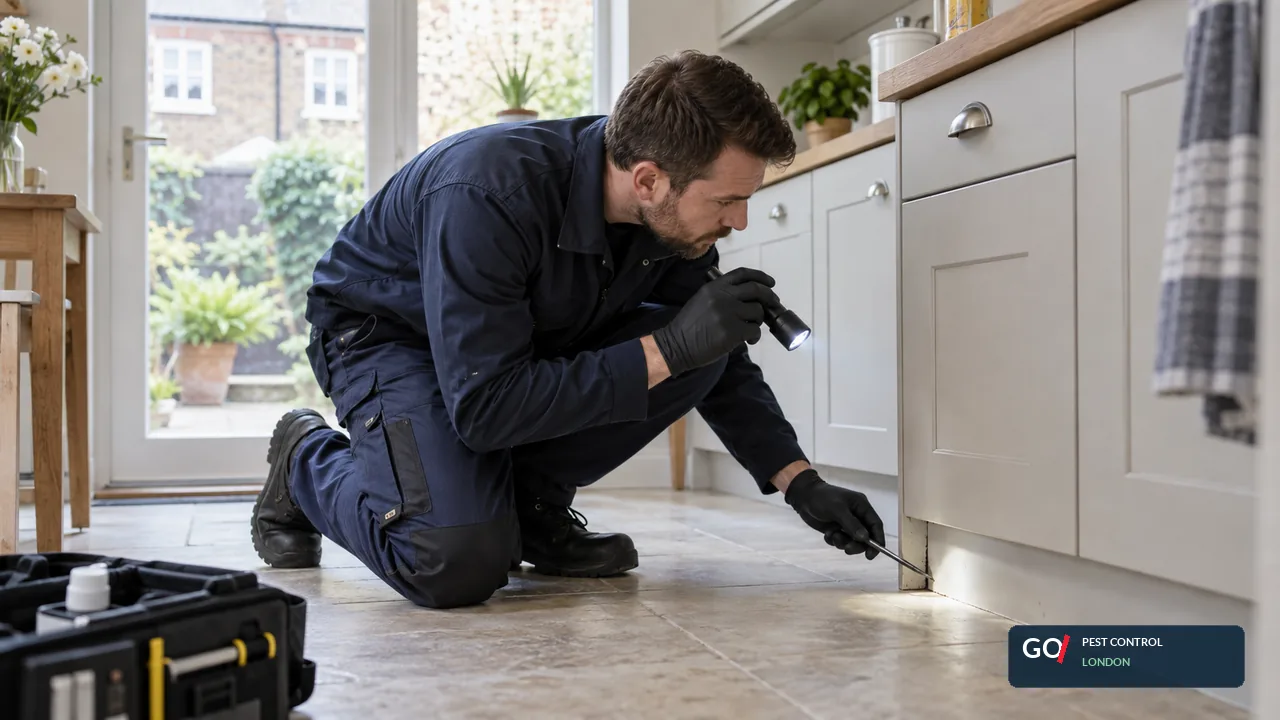
A useful visit should end with a clear explanation of what was found, what was treated, any limits on access, and the next review point. Ask for the total scope and price before authorising work.
Common questions
Why do ants return after cleaning?
The nest and established trail remain, and tiny food residues can still attract workers.
Can I seal the crack first?
Record the route first. Ants may simply find another opening if the colony remains active.