Start with what you know
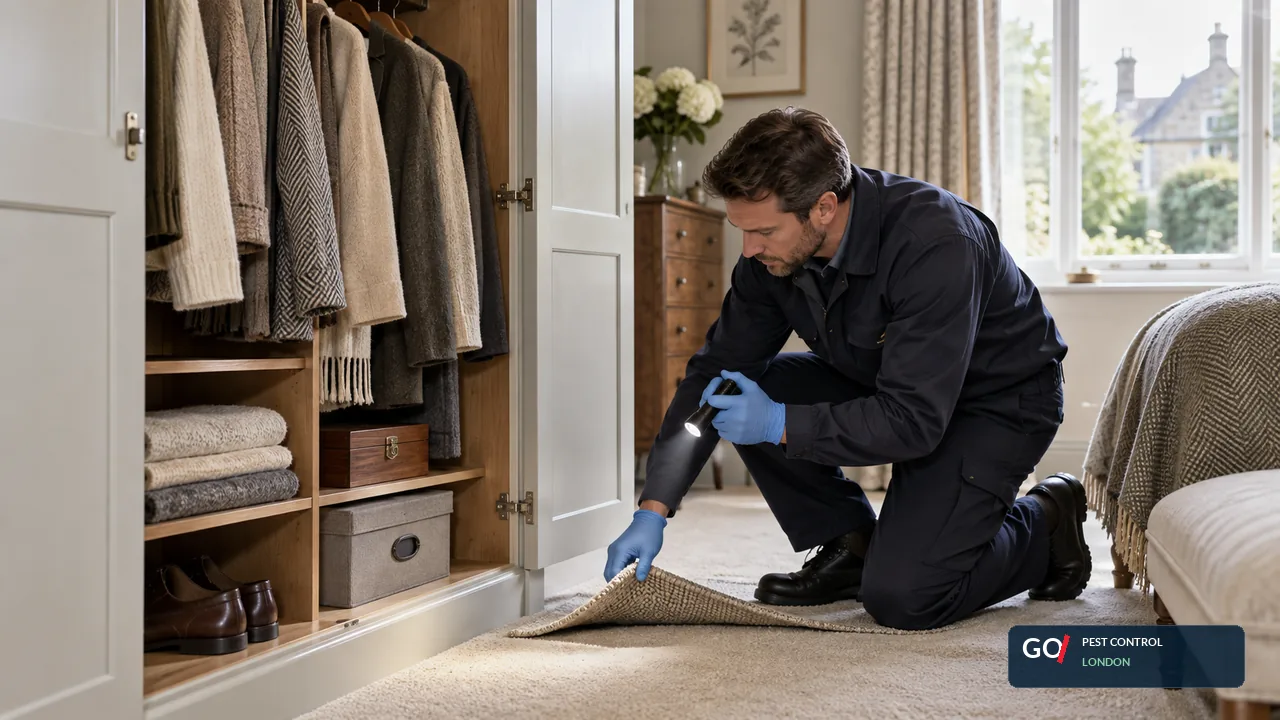
Adult moths are noticeable, but the larvae cause fabric damage. The priority is to find affected natural fibres and clean the quiet edges where larvae feed.
Why this problem happens
Wool, cashmere, fur, feathers and natural-fibre rugs can support clothes moth larvae. Damage often develops in dark, undisturbed storage, beneath furniture or along carpet edges.
What you can do now
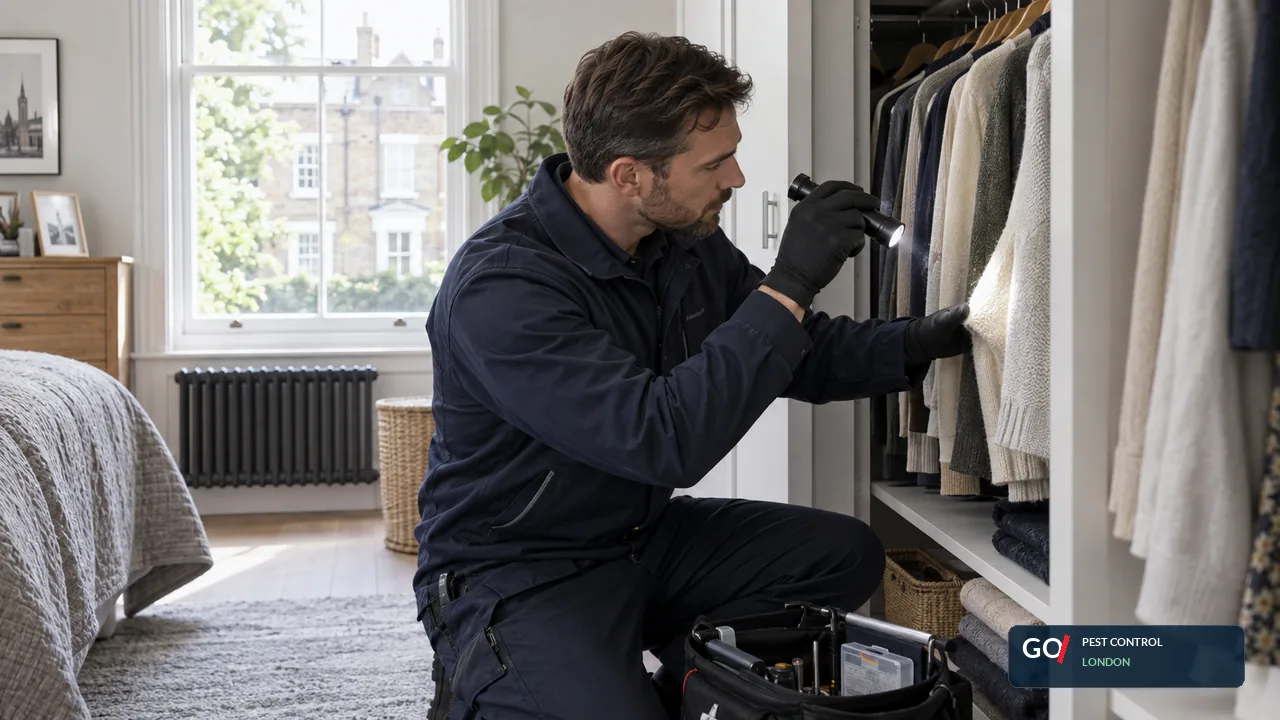
- Inspect seams, folds and the backs of stored natural-fibre items.
- Bag affected items before moving them and follow the care label for hot washing, dry cleaning or controlled freezing.
- Vacuum wardrobe edges, floor cracks and beneath furniture.
- Store clean seasonal clothing in sealed containers or garment bags.
What not to do
Do not spray clothing with a product that is not labelled for that use. Do not treat only the flying adults while ignoring larvae and affected materials.
When to call a professional
Professional help is useful when damage appears in several rooms, fitted carpets are involved, or activity continues after cleaning and storage changes.
A useful visit should end with a clear explanation of what was found, what was treated, any limits on access, and the next review point. Ask for the total scope and price before authorising work.
Common questions
Do clothes moths eat synthetic fabric?
They mainly feed on animal fibres, but mixed fabrics may be damaged where natural fibres or food residues are present.
Do cedar products solve an infestation?
They may deter some adults but will not remove established larvae.