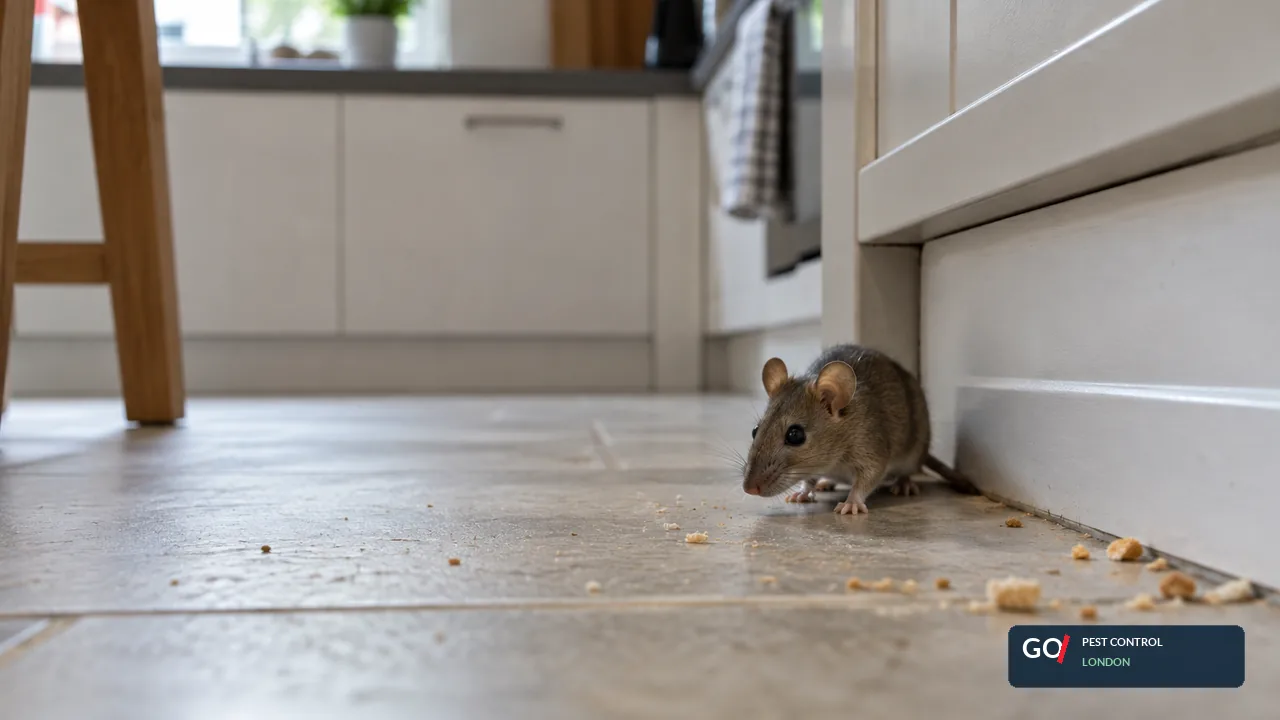
Start with what you know
Finding a mouse in the kitchen is upsetting, but rushing around with poison or moving everything can make the problem harder to understand. Start by protecting food, recording the signs and limiting easy access.
Why this problem happens
Kitchens give mice three things they need: food, water and hidden routes behind units. One sighting does not tell you where the nest is. Mice often travel beside walls, through pipe gaps and behind appliances, so the useful question is where the route begins.
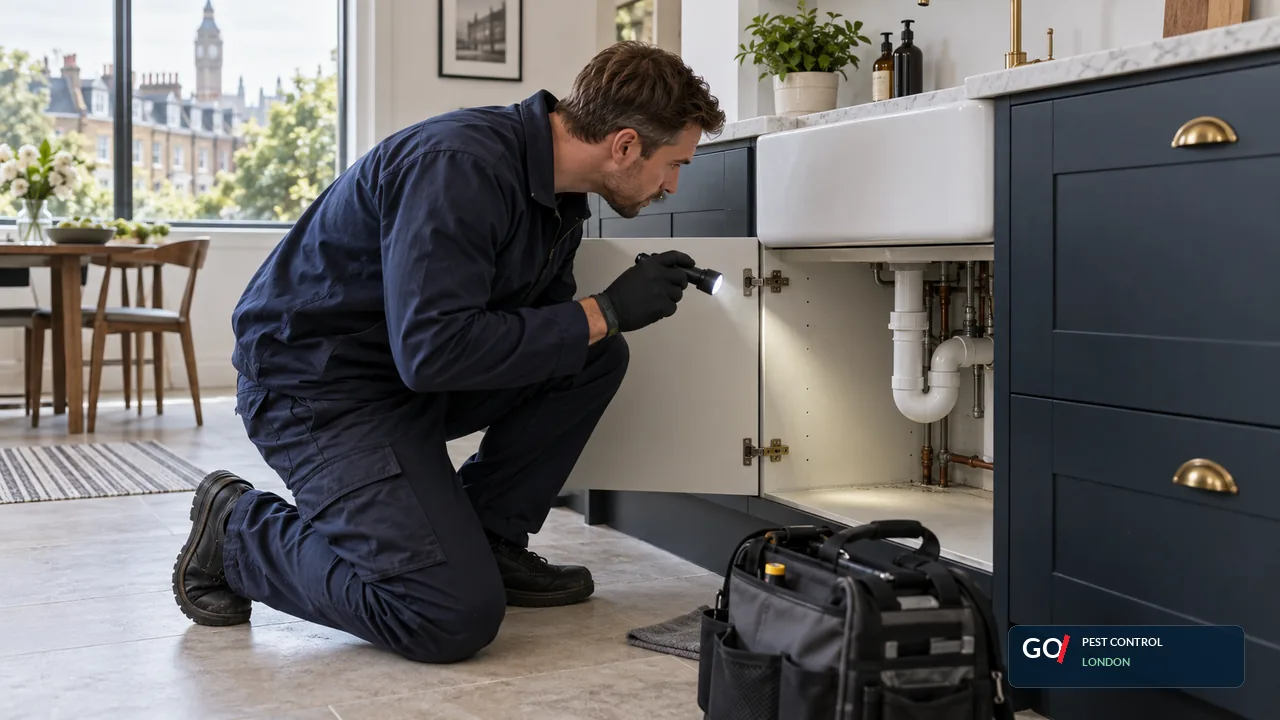
What you can do now
- Put open food, pet food and dry goods into hard containers with tight lids.
- Clean crumbs and grease, then leave suspected routes undisturbed long enough to check for fresh signs.
- Photograph droppings or damage before cleaning them safely with gloves and disinfectant.
- Check visible pipe gaps, kickboards and the spaces beside the fridge or cooker without dismantling fitted units.
What not to do
Do not scatter loose poison or place traps where children or pets can reach them. Do not seal every gap before activity is controlled; trapped mice may find a new route or die in an inaccessible void.
When to call a professional
Arrange an inspection when signs return after cleaning, droppings appear in more than one room, food packaging is damaged, or scratching comes from a wall or ceiling. A technician can combine control, monitoring and proofing in the right order.
A useful visit should end with a clear explanation of what was found, what was treated, any limits on access, and the next review point. Ask for the total scope and price before authorising work.
Common questions
Does one mouse mean an infestation?
Not always, but a mouse seen indoors has found a route and a reason to stay. Check for fresh droppings, gnawing and repeated sightings.
Can mice climb kitchen units?
Yes. Mice can climb rough surfaces and use pipes, cables and gaps behind cabinets.