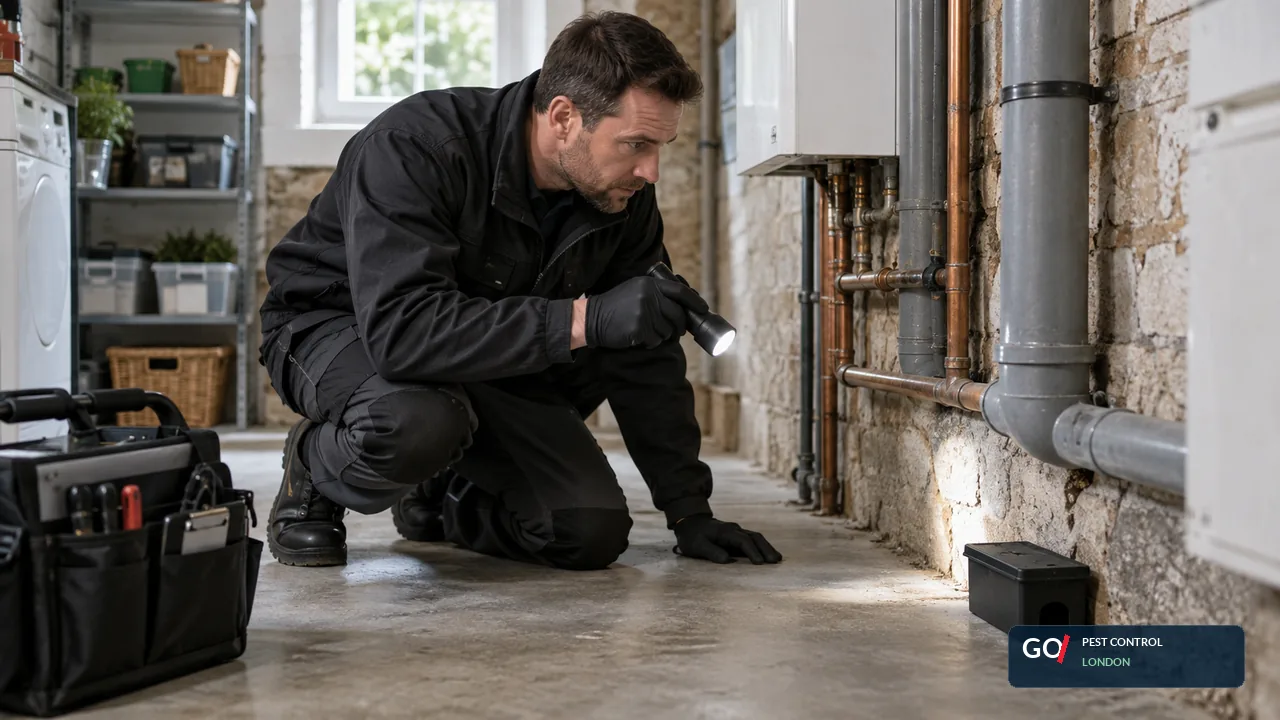
Start with what you know
A rat crossing a garden does not always mean it lives on your property. The best first response is to remove the reasons it may return and look for a repeatable route.
Why this problem happens
Rats use cover, food and water. Bird seed, open compost, overflowing bins, pet food and gaps beneath sheds can turn a passing route into regular activity. Drain faults can also bring rats close to buildings.
What you can do now
- Stop ground feeding birds for a short period and clear spilled seed.
- Keep bin lids closed and avoid putting cooked food into an open compost heap.
- Look for smooth runs beside fences, fresh holes, greasy marks and droppings.
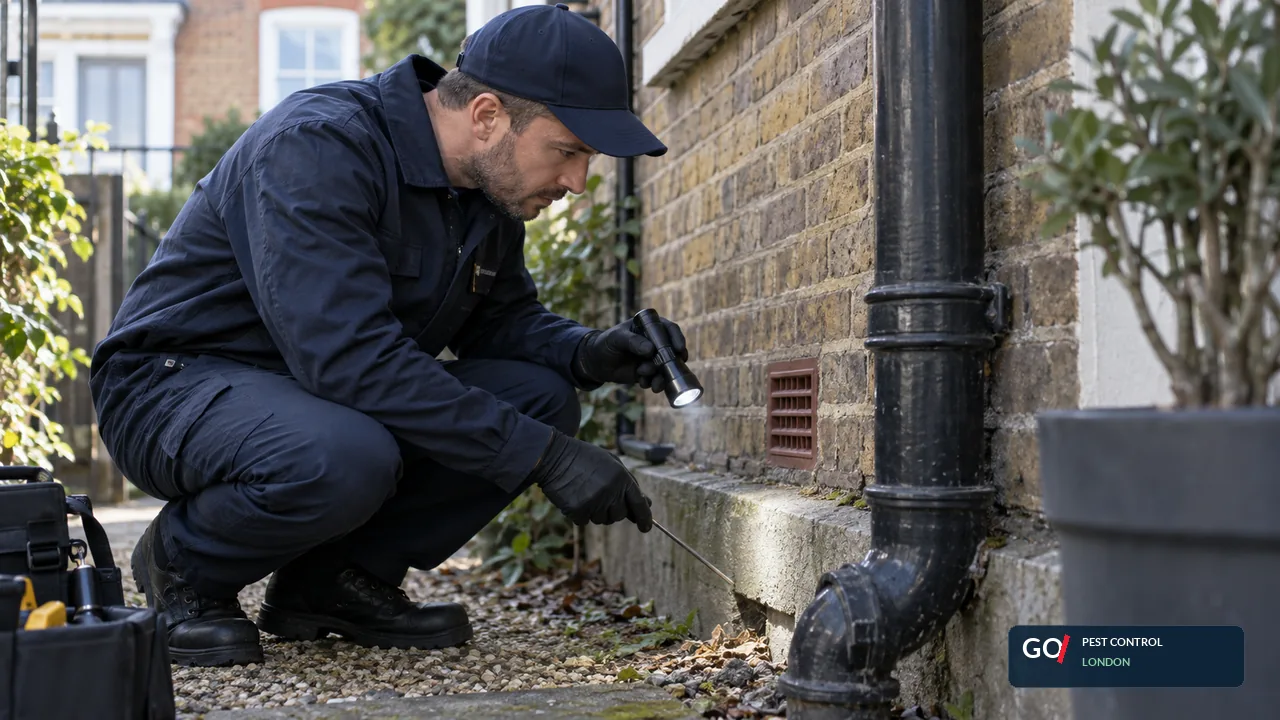
- Check doors, air bricks and pipe entries at the house, but do not block an active hole without a plan.
What not to do
Do not pour chemicals, fuel or boiling water into burrows. Do not use unsecured bait outdoors; it can harm pets, wildlife and non-target animals.
When to call a professional
Call for help if rats enter the building, burrows sit close to foundations, activity continues after food is removed, or a drainage route is suspected. The source matters more than simply killing the rats you see.
A useful visit should end with a clear explanation of what was found, what was treated, any limits on access, and the next review point. Ask for the total scope and price before authorising work.
Common questions
Will removing bird food solve the problem?
It may remove a strong attraction, but established rats can still use shelter, waste or drainage routes.
Should I fill a rat hole?
Only after activity and the route have been assessed. Filling an active hole can move rats elsewhere.