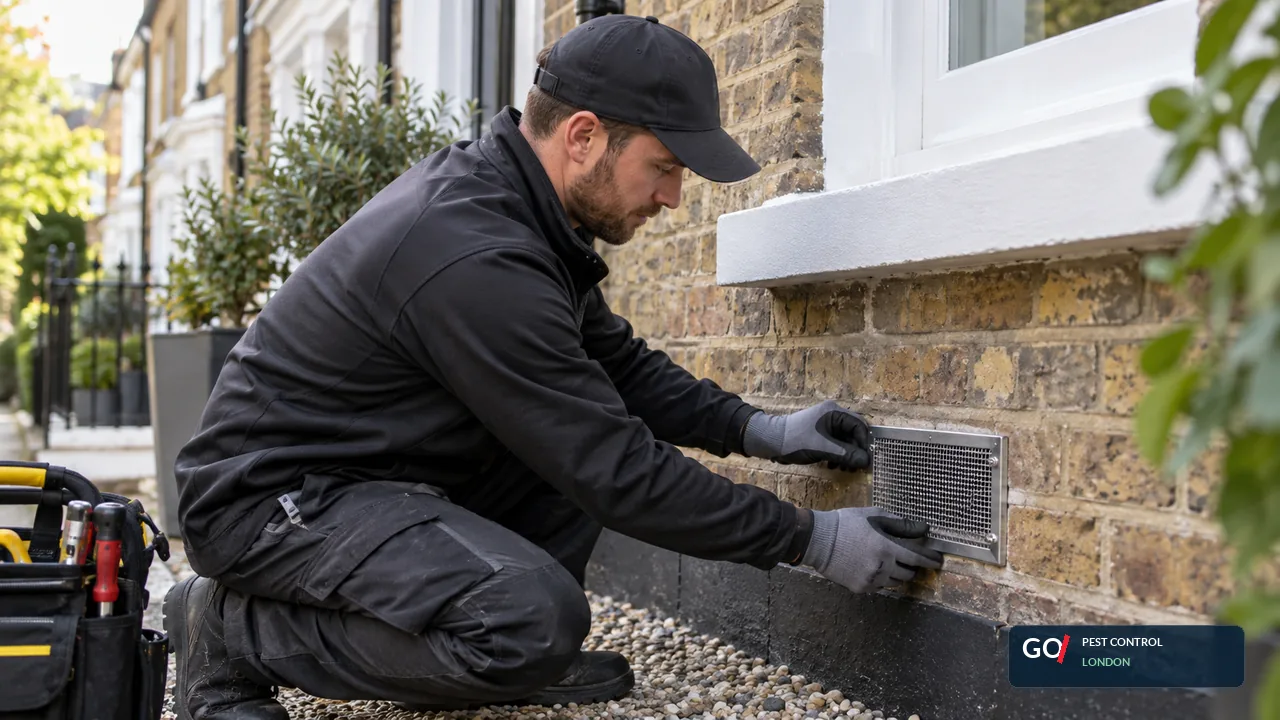
Start with what you know
Good proofing follows evidence. Sealing every visible crack wastes time and can block ventilation without closing the route the pest actually uses.
Why this problem happens
Mice can use very small openings, rats exploit larger gaps and damaged drains, while insects use different routes again. Grease marks, droppings, gnawing and repeated sightings help rank the likely entries.
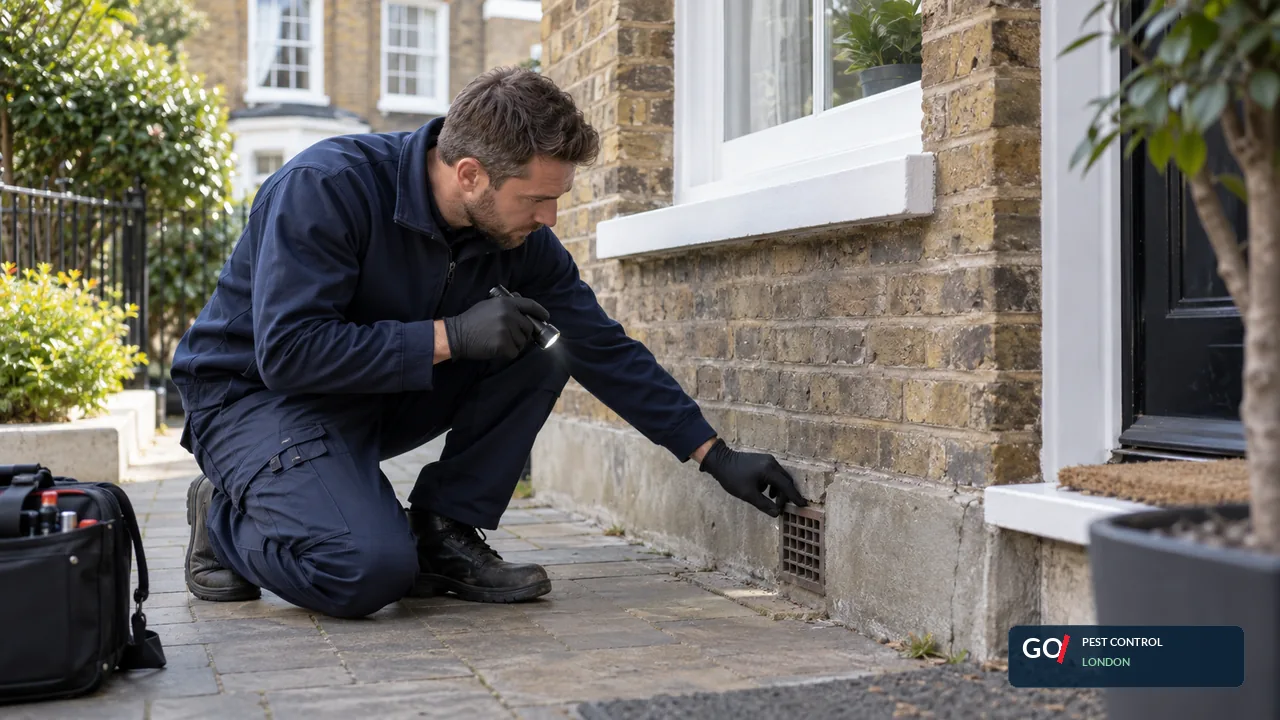
What you can do now
- Map signs inside and compare them with pipes, doors and vents outside.
- Prioritise gaps that connect directly to active areas.
- Use durable, pest-resistant materials while preserving required airflow and drainage.
- Monitor after repair so a missed route is found quickly.
What not to do
Do not use expanding foam alone for rodent proofing. Do not cover air bricks or weep holes without a suitable ventilated solution.
When to call a professional
Professional proofing is helpful where access is difficult, several flats share routes, drainage is involved or repairs need specialist materials.
A useful visit should end with a clear explanation of what was found, what was treated, any limits on access, and the next review point. Ask for the total scope and price before authorising work.
Common questions
How small a gap can a mouse use?
A young mouse can use a gap of roughly 6 mm, depending on the shape and surrounding surface.
Should proofing happen before baiting?
Timing depends on the route. Active rodents are often controlled and monitored before final sealing.