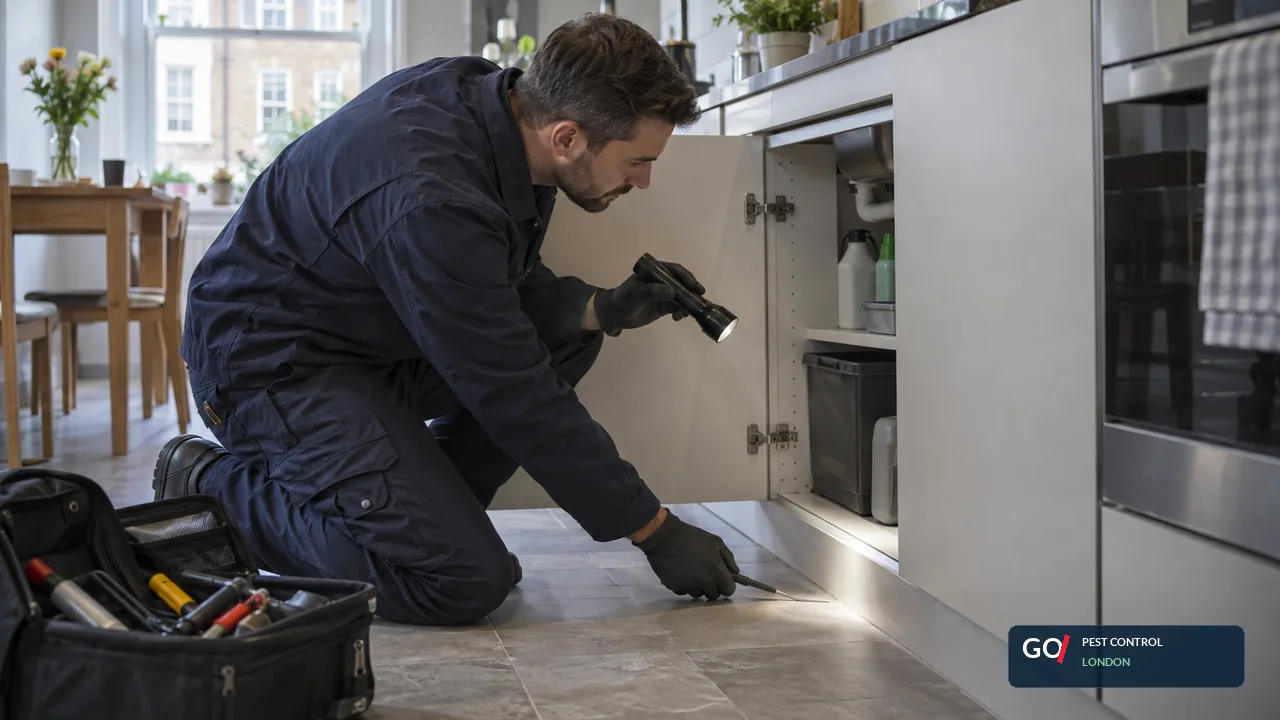
Start with what you know
A pest sighting in a food business needs calm, recorded action. Protect food and customers first, then preserve enough evidence to identify the source.
Why this problem happens
Stock movement, deliveries, waste, drains and structural routes can all contribute. A single insect may be introduced in goods, while repeated signs can indicate established activity.
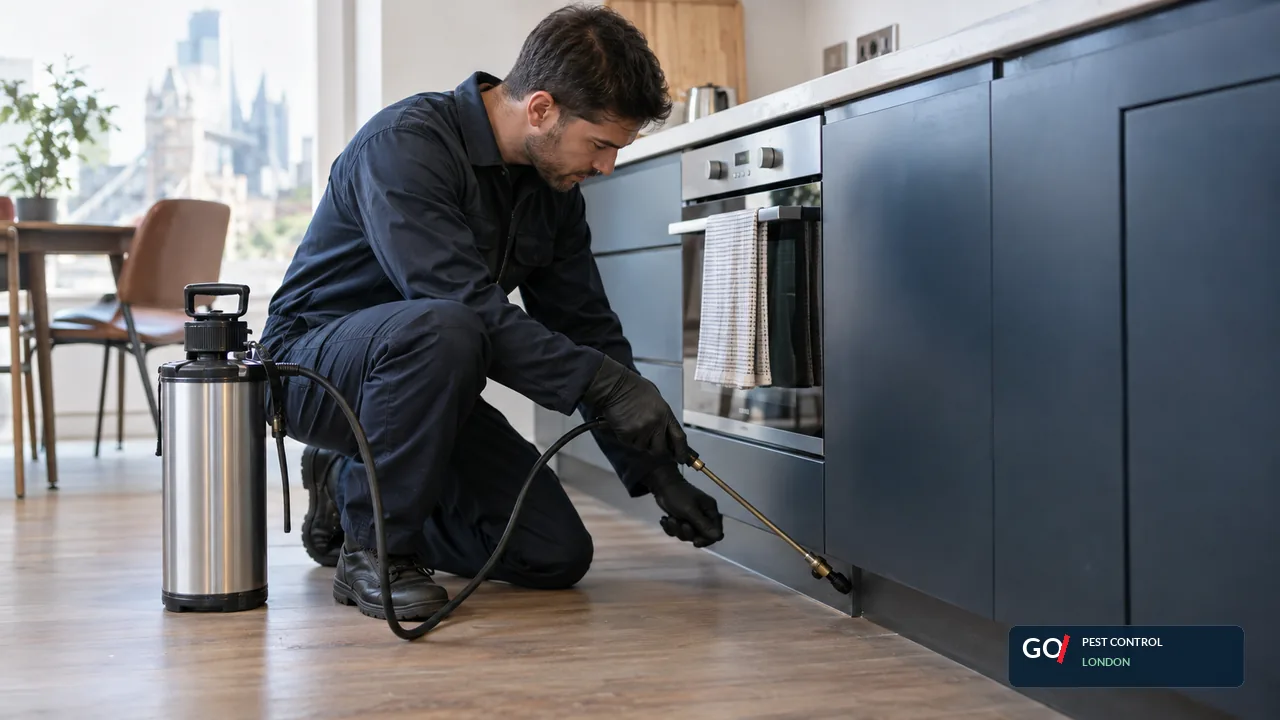
What you can do now
- Stop using affected food or preparation areas and isolate exposed stock.
- Photograph the pest and safely retain a sample if possible.
- Record the time, exact location, delivery activity and staff observations.
- Contact the pest contractor and follow the business food-safety procedure.
What not to do
Do not spray near food, hide evidence or reopen an affected area without assessing contamination. Avoid disposing of all evidence before identification.
When to call a professional
Urgent professional attendance is appropriate when food may be contaminated, rodents or cockroaches are present, or the business cannot safely isolate the affected area.
A useful visit should end with a clear explanation of what was found, what was treated, any limits on access, and the next review point. Ask for the total scope and price before authorising work.
Common questions
Must the business close?
That depends on the pest, contamination risk and areas affected. Follow your food-safety plan and regulatory advice.
What records should be kept?
Keep sightings, actions, contractor reports, monitoring results and proofing recommendations.