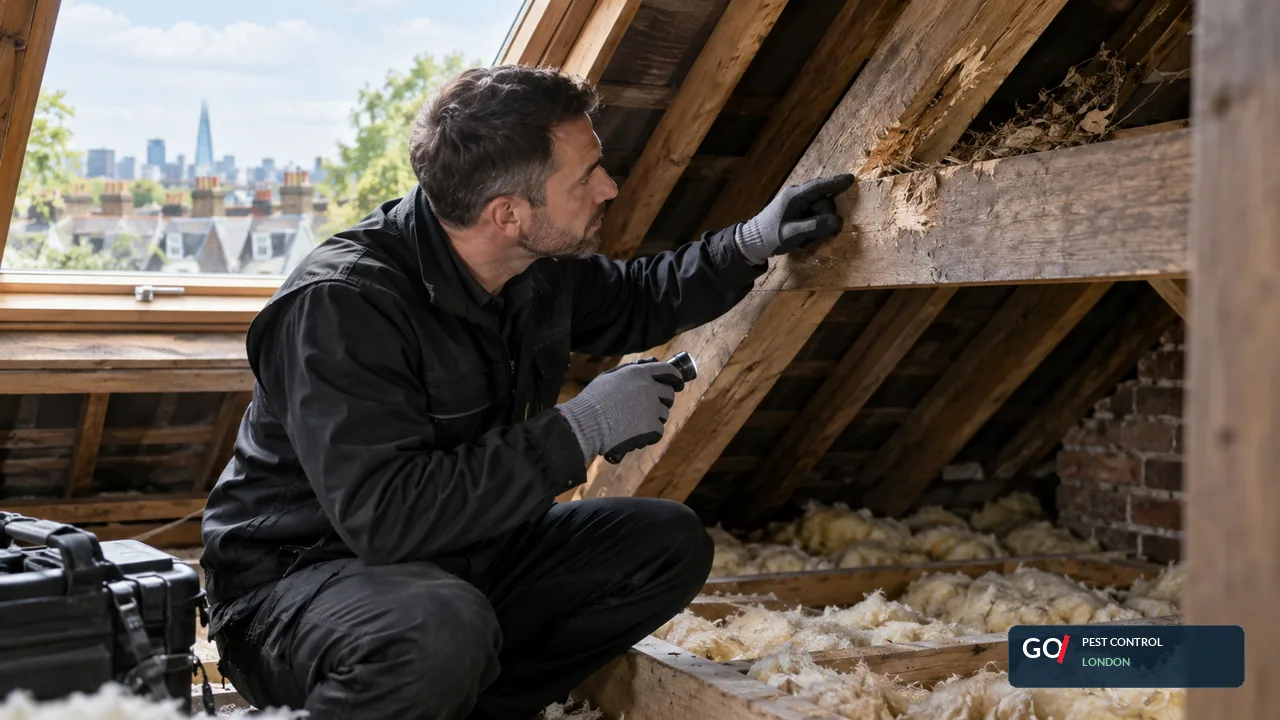
Start with what you know
Noise alone cannot confirm an animal. Timing, entry points, droppings and damage provide a much better picture.
Why this problem happens
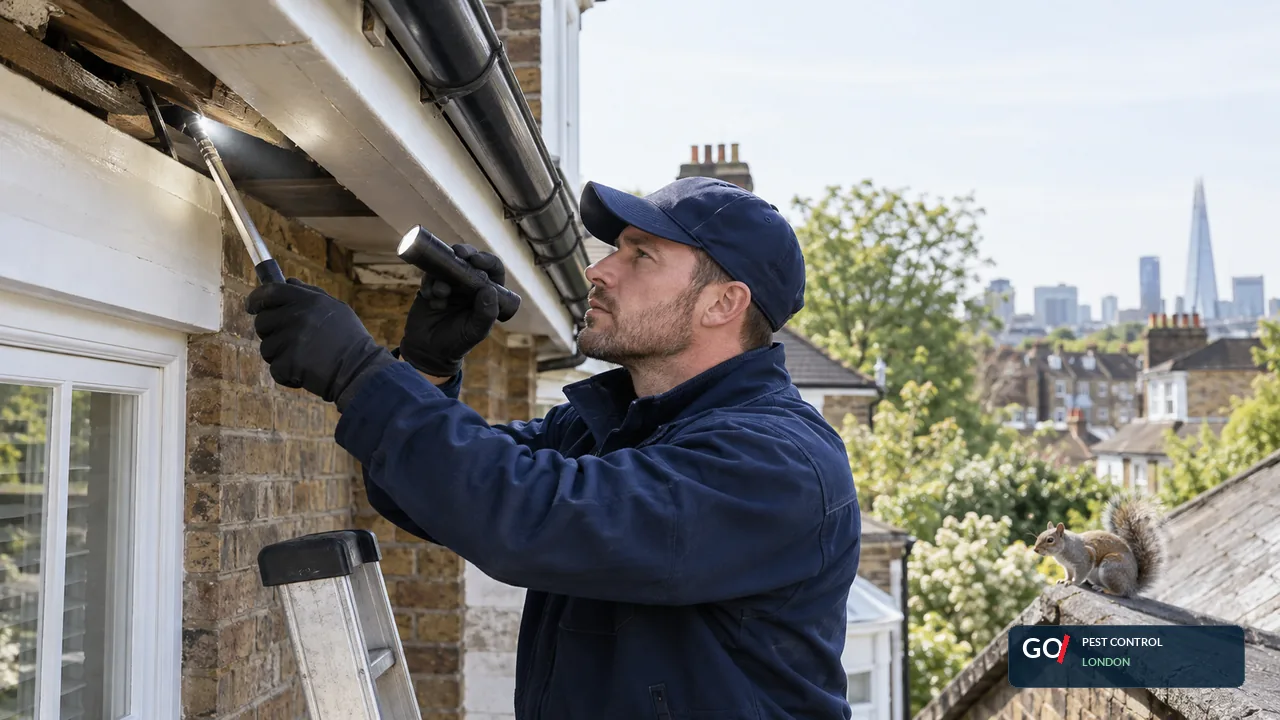
Squirrels are often active in daylight and can make heavy running or gnawing sounds. Rats and mice are commonly active after dark, but behaviour varies. Birds can also create scratching and fluttering near roof edges.
What you can do now
- Record the time, duration and part of the loft where the sound is strongest.
- Inspect the roof from ground level for damaged vents, soffits or tiles.
- Look only from a safe access point for droppings, nesting material or gnawing.
- Keep people away from unsafe loft boards, wiring and disturbed insulation.
What not to do
Do not block an entry point while an animal may be inside. Do not handle nests or droppings without suitable precautions.
When to call a professional
Arrange an inspection when noises repeat, wiring may be damaged, young animals could be present, or the roof opening cannot be assessed safely.
A useful visit should end with a clear explanation of what was found, what was treated, any limits on access, and the next review point. Ask for the total scope and price before authorising work.
Common questions
Are daytime loft noises always squirrels?
No, but timing is a useful clue when combined with evidence.
Can I seal the roof gap immediately?
Only after confirming that no animal is trapped inside and any legal considerations are addressed.