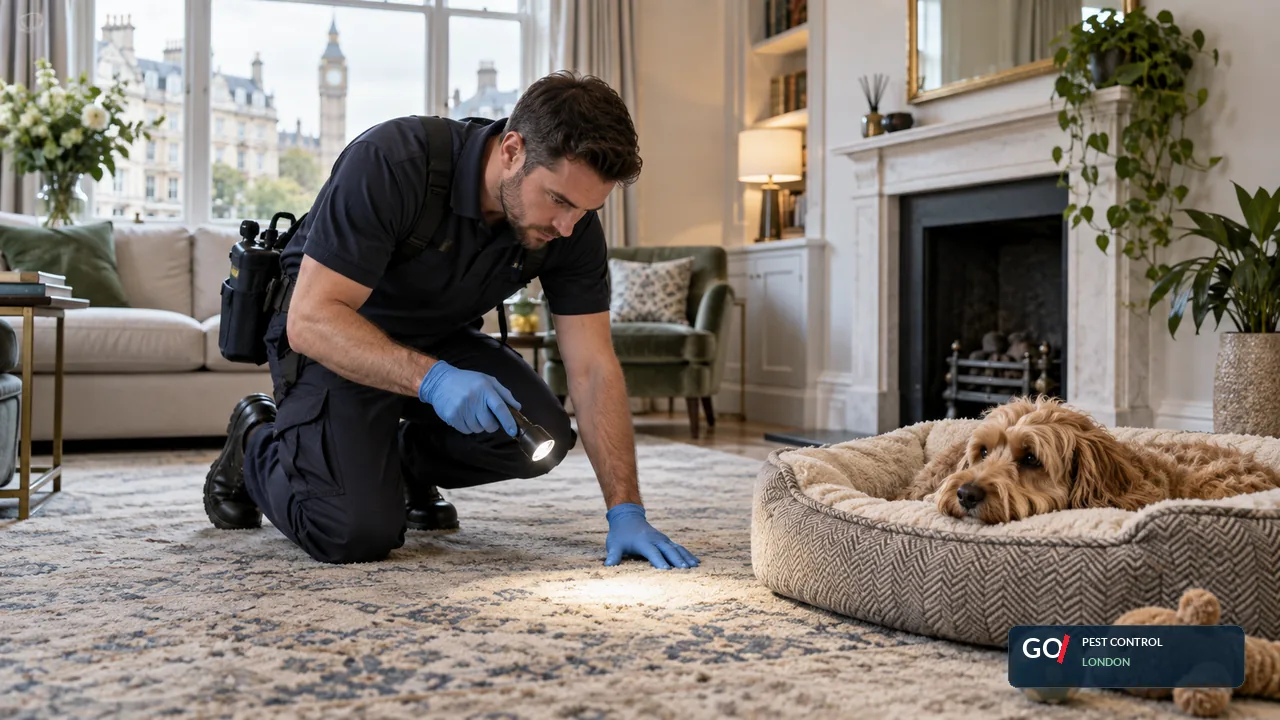
Start with what you know
Fleas do not prove that a home is dirty, and a current pet is not always present. Pupae can remain in carpets and gaps, then emerge when movement and warmth return.
Why this problem happens
A previous tenant may have kept animals, visiting pets can introduce fleas, and wildlife can support them in lofts or subfloors. Empty properties sometimes show activity soon after people move in because vibration triggers emergence.
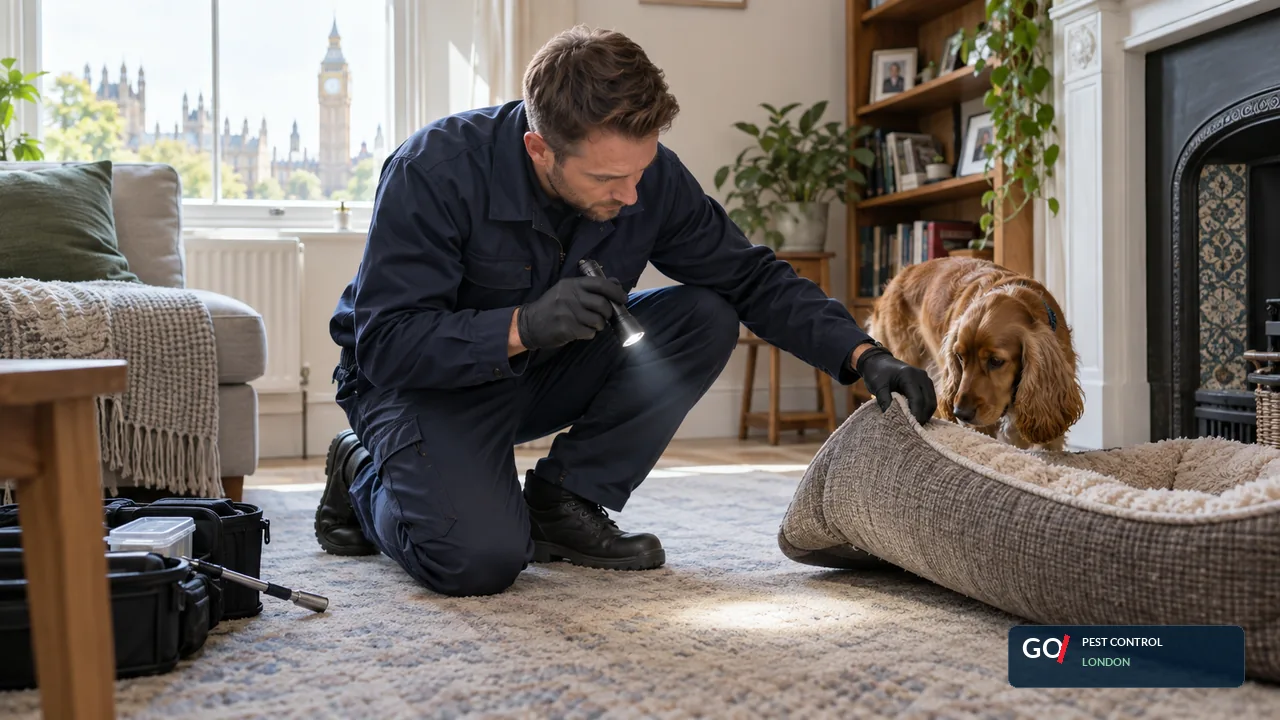
What you can do now
- Check ankles and lower legs for activity, but remember that marks alone are not identification.
- Use light-coloured socks to observe jumping insects and safely collect a sample.
- Vacuum floors, edges and soft furniture, then empty the vacuum outside.
- Ask about previous pets and check whether wildlife has access to voids.
What not to do
Do not apply several different insecticides. Incorrect products or incomplete coverage can create unnecessary exposure without interrupting the life cycle.
When to call a professional
Treatment is useful when fleas are confirmed or repeated activity continues after thorough vacuuming. The plan should cover affected floors and furnishings and include clear advice about pets and follow-up.
A useful visit should end with a clear explanation of what was found, what was treated, any limits on access, and the next review point. Ask for the total scope and price before authorising work.
Common questions
How long can fleas remain in an empty home?
Protected stages can persist for months under suitable conditions and emerge when hosts return.
Will vacuuming remove all fleas?
It helps greatly but may not remove every protected stage.