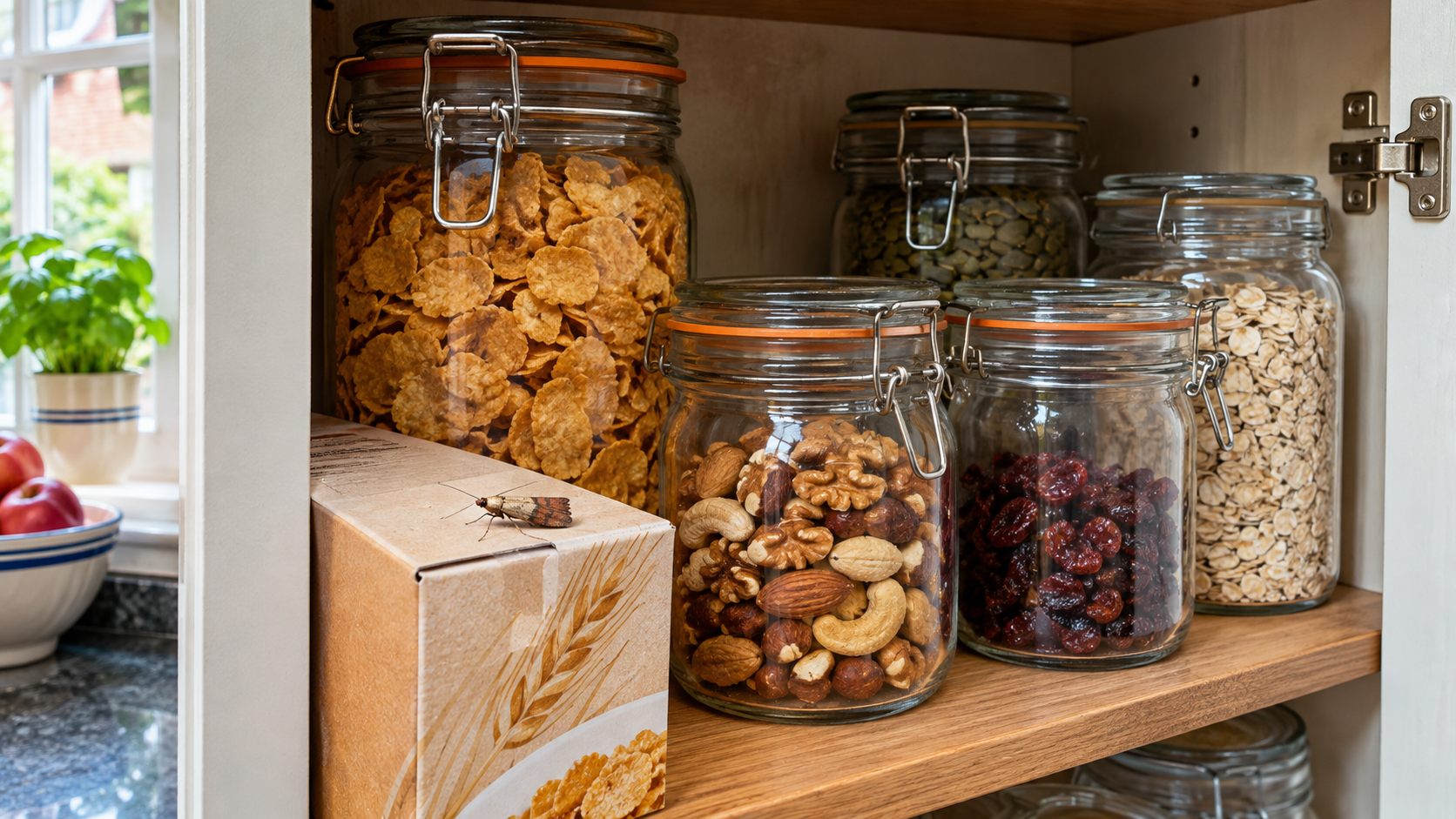
Start with the food, not the flying moth
One small moth crossing the kitchen is easy to dismiss. Several appearing near a cupboard over a few days deserve a closer look, particularly if you store flour, oats, nuts, dried fruit, bird seed or pet food nearby. Catching the adults may make the room feel better, but the larvae developing in a packet are the part of the problem you need to find.
The name “pantry moth” is often used for the Indian meal moth, a stored-food pest recorded in British homes. It is different from the clothes moths that damage wool and other animal fibres. You do not need to identify a moth to species before checking food, but you do need to avoid treating every small moth as the same pest. The location of larvae, webbing and damaged material is often more useful than the adult flying across the room.
If you have only seen one moth, note where and when you saw it. Check the nearest food cupboard, then look again over the next few days. If you find webbing or larvae in food, move from observation to a careful cupboard inspection.
What pantry moth activity looks like
Indian meal moth adults are small, and their forewings have a pale area near the body and a darker copper-brown outer area. Lighting and the way the insect holds its wings can make that pattern difficult to judge. A photograph of a resting moth, taken close enough to show the wings, can help with identification. A blurred picture of one in flight usually cannot.
The more decisive signs are inside stored products. Fine silk can bind grains, crumbs or oats into small clumps. You may see a pale caterpillar-like larva with a darker head, a shed skin or a cocoon in a packet fold or cupboard corner. Webbing at the top of a packet can be easy to miss when the contents look normal from the outside. Check the inside seam and the food itself rather than relying on an intact-looking box.
Larvae can move away from the food before they pupate. A small larva on a wall or ceiling near the cupboard does not mean the wall is the food source. It can mean the source is somewhere below or behind it. Trace back to stored products before pulling apart fittings.
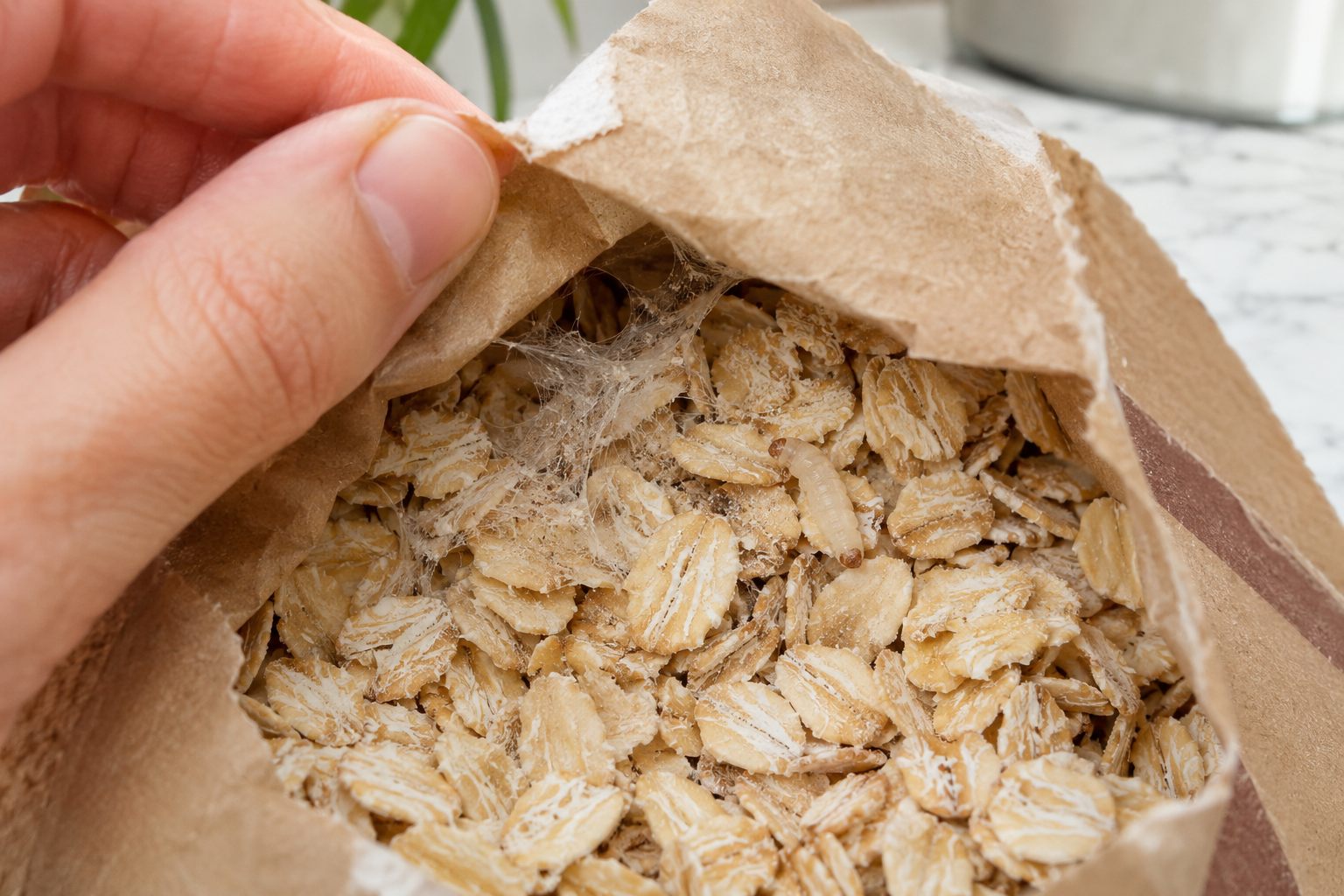
Search the cupboard in a useful order
Begin with the cupboard where adults are most often seen, then check adjoining storage. Put a clean tray or sheet of paper on the worktop. Take products out one at a time, keeping each item separate so you can see which packet sheds webbing, dust or larvae. This also stops an affected packet contaminating the rest of the shelf while you inspect.
Start with opened dry goods: cereal, flour, rice, oats, nuts, seeds, dried fruit, baking ingredients and spices. Then check unopened products in cardboard boxes or thin bags. Packaging can have tiny gaps or damage that are easy to overlook. Do not forget dry pet food, fish food and bird seed in utility rooms, under stairs or near a back door. A product used only occasionally can support activity for longer than something you handle every week.
Look beneath shelf liners, behind the lip of a shelf and in the corners where crumbs collect. Inspect the cupboard hinges and the gap between the back panel and shelf if you can do so without dismantling cabinetry. A few empty cocoons in a corner may show where larvae moved to pupate, while the food source is still elsewhere. Make a short note of each suspect product and where it was stored. If several cupboards are involved, that record prevents you from checking the same items repeatedly and forgetting another area.
Keep one clear photograph of the insect and one of the affected product before disposal. If identification remains uncertain, safely contain a specimen in a small sealed container. Avoid handling loose larvae and food with bare hands, and wash hands and work surfaces after the inspection.
What to do with affected food
Discard food that contains larvae, webbing or obvious insect activity. Seal it in a bag before taking it to an outside bin, so insects do not escape into another cupboard. If a recently purchased, unopened product is affected, keep the packaging and purchase details long enough to report it to the retailer. The source may have entered the home with the product rather than developed in your kitchen.
Move unaffected dry goods into clean, rigid containers with close-fitting lids. Check the contents before transferring them; a sealed jar will contain an existing problem but will not make infested food usable. Label containers with the product and, where helpful, the purchase date. This makes future checks quicker and prevents a half-used packet being put back behind newer stock.
Do not pour a questionable packet into the compost or scatter it outdoors. The immediate aim is to remove the breeding material cleanly. It is also sensible to check the adjacent unopened products again after a short interval, particularly those that were stored beside a confirmed source.
Clean after you have found the source
Empty the affected cupboard before cleaning it. Vacuum crumbs from shelf edges, joints and accessible cracks, then dispose of the vacuum contents promptly outside. Wipe food-contact surfaces with a suitable household cleaner and let them dry fully before restocking. Clean storage jars and lids too, including the threads where crumbs can lodge. Replace a damaged shelf liner if food debris has worked underneath it.
Cleaning is useful, but it does not compensate for leaving an infested packet in place. Nor does spraying adult moths solve a larval problem in food. Never apply an insecticide to food, food packaging or a food-preparation surface unless its label specifically permits that use, and follow the label exactly. Avoid mixing products or using a household spray as a substitute for finding the source.
After restocking, watch for fresh adults and new webbing. A few adults may still emerge from pupae already hidden away, so a sighting immediately after cleaning is not proof that the inspection failed. A continuing pattern, particularly with new larvae or webbing, means another source or harbourage may have been missed. Record dates and locations instead of repeatedly spraying the cupboard.
Is it a pantry moth or a clothes moth?
The distinction matters because the search area changes. Pantry moth larvae feed in stored dry foods. Clothes moth larvae are associated with animal fibres such as wool, cashmere, fur or feathers and are usually found in wardrobes, carpets or stored textiles. An adult on the kitchen wall can simply have travelled from another room, so inspect both the likely food source and the nearby material before deciding.
If you find damage, larvae or webbing on natural-fibre garments rather than in food, follow the site’s guide to protecting a wardrobe from clothes moths. For confirmed textile activity spread across carpets or wardrobes, professional moth control is a more relevant next step than treating a food cupboard. The company’s moth service page describes textile moth assessment and treatment; ask the team separately about a suspected stored-food pest rather than assuming the same treatment applies.
Other stored-product insects can also appear in flour, grain and dried foods. Small beetles, for example, require a different identification even though the first response of finding and removing affected stock is similar. If the insect is unclear, a sharp photograph or contained specimen is more valuable than a guess based on its colour.
When to ask for an inspection
Consider professional help when adults keep appearing after a thorough stock check, when larvae occur in several rooms, or when you cannot access the suspected source without moving fitted units. The same applies to a food business, where stock isolation, identification and written records need to fit the business’s food-safety procedure. Explain which products were affected, what you removed, what you cleaned and whether activity has changed. Those details help focus an inspection.
For a home in London, you can send the team photographs and a description of the problem or call 020 4586 8488. Ask specifically whether they can assess a stored-product moth, since the published moth treatment page addresses textile moths. A useful response should identify the pest and source before recommending any product or treatment.
A short check a week later
Revisit the cleaned cupboard after about a week. Look at the previously affected shelf, the lids of transferred food, and the products stored next to the original source. Note any new webbing, larvae or adult moths and where each appeared. If there is no new evidence, keep dry goods sealed and continue normal cleaning. If there is fresh evidence, use the location to narrow the next search rather than emptying every cupboard indiscriminately.
The practical goal is simple: identify the food that supported the larvae, remove it without spreading insects, clean the places where crumbs and pupae can remain, and then check whether new activity appears. That sequence gives you a better answer than judging success by whether you saw a single moth today.