Share what has changed
Recent noises, sightings, bites or damage help us understand whether activity is increasing, moving or confined to one point.
LOCAL · CAREFUL · EVIDENCE-LED
A pest sighting in Palmers Green does not always reveal where the activity began. We inspect the evidence, likely access routes and the way the affected space is used before recommending treatment.
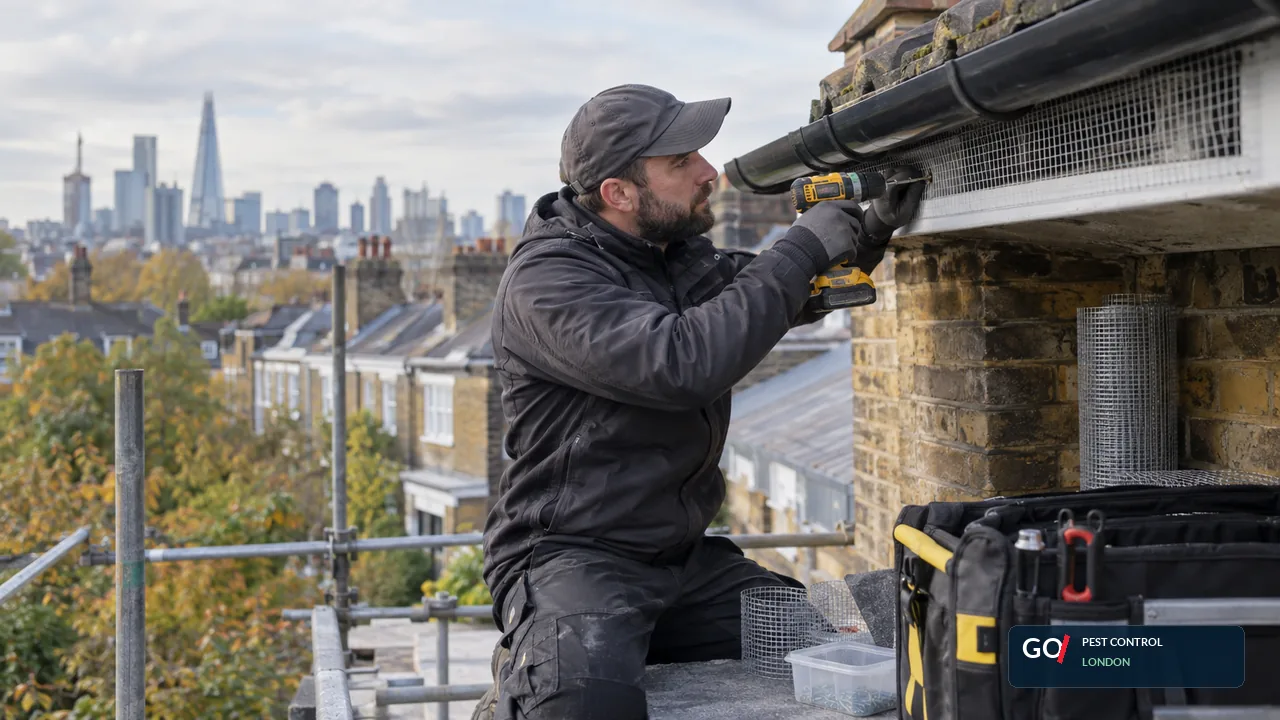
PEST PROBLEMS IN CONTEXT
A useful inspection begins with what has actually been seen, heard or damaged. In Palmers Green, we ask where the sign appeared, when it was noticed and whether it is confined to one room or moving between spaces. That information helps distinguish an isolated incident from established activity.
The visit then follows the evidence towards harbourage, food, moisture and entry points. We do not treat every mark or noise as proof of a particular pest. Where identification is uncertain, monitoring can be more responsible than applying a treatment on assumption.
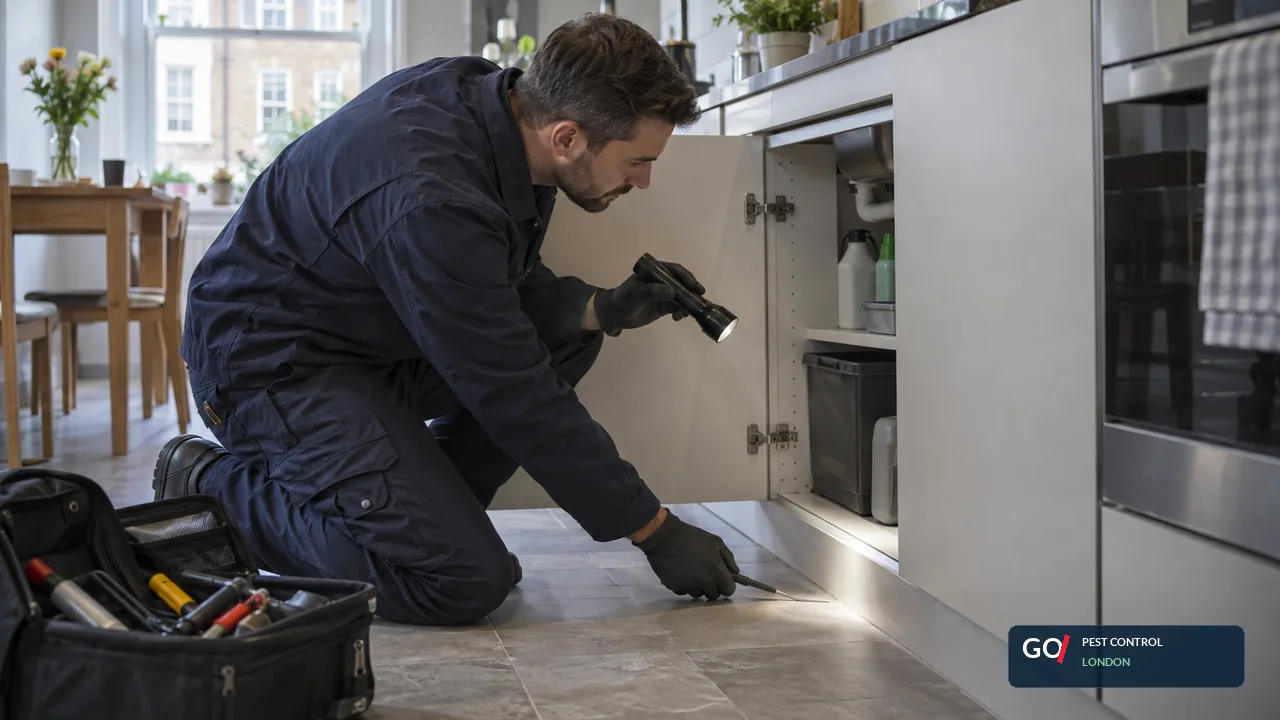
FROM FIRST CALL TO FOLLOW-UP
Recent noises, sightings, bites or damage help us understand whether activity is increasing, moving or confined to one point.
Instead of issuing a generic list, we give preparation relevant to the suspected pest and proposed inspection.
The technician tests the initial account against physical signs and adapts the recommendation where the facts point elsewhere.
You know what was found, what was done and which prevention or follow-up action has priority.
RELEVANT SERVICES
Identification comes first because preparation, treatment and follow-up differ by species and setting.
Careful inspection, room-specific preparation and treatment planned around the life cycle.
Practical exclusion work focused on confirmed or credible entry points.
Evidence-led control with monitoring of feeding, movement and likely entry routes.
Targeted work around warm, concealed harbourage with monitoring where appropriate.
Inspection, controlled baiting and advice on the small gaps mice can exploit.
Survey-led deterrence and exclusion appropriate to the species and structure.
A USEFUL VISIT
A clear plan for a house seeing ants briefly around a conservatory threshold should answer one point before treatment is chosen: an established trail, species and access to sweet food or damp. Different pests can leave superficially similar signs, while the same pest may require a different response in a bedroom, food room or roof void. Identification and context therefore come before product selection.
A sound inspection depends on permission and safe reach. Here, external paving and internal flooring meet at the report point. The proportionate course is to follow the trail both ways and treat the nest or entry only if the evidence warrants it. If a linked space is outside the customer's control, the findings should explain why access matters so that an owner, manager or neighbouring occupier can make an informed decision.
Each intervention requires support from the findings. In this situation we would follow the trail both ways and treat the nest or entry only if the evidence warrants it. Monitoring or repeat inspection may be more useful than adding product, particularly where access was partial or activity intermittent. Any control is documented and kept away from foreseeable contact by children, pets, staff or the public.
The findings, rather than a standard checklist, should shape prevention. A sensible next step is to remove attractants, correct moisture and maintain the seal where movement was confirmed. The customer needs more than a stock instruction to improve housekeeping; the customer needs to know which gap, food source, moisture problem or working routine matters in this property. Historic evidence can then be cleared, leaving a reliable baseline for later checks. That measured finish is especially important where daily routines continue and the treated space must return to normal use.
HOMES & WORKPLACES
We plan around normal household use and explain precautions for children, pets, bedrooms, kitchens and stored belongings where relevant.
We can record evidence within the authorised area and explain when adjoining spaces or common parts may also need attention.
Discreet scheduling, clear access and concise findings help businesses respond without unnecessary interruption.
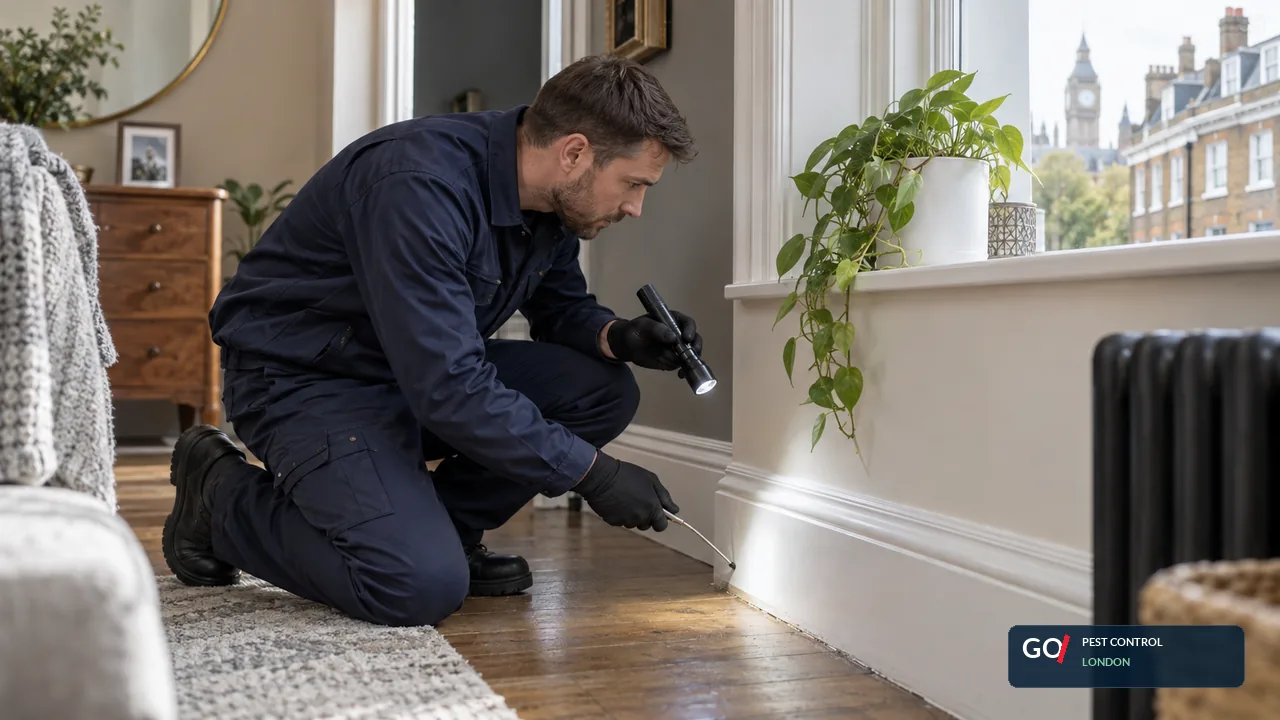
INSPECTION & TREATMENT
During a Palmers Green visit, the technician compares the reported activity with physical evidence. Inspection may include edges, voids, service routes, storage, external elevations or furniture, depending on the pest and safe access. The aim is to define the active area before choosing a method.
Treatment can involve secured bait, traps, monitors, targeted insecticide, nest work, physical removal or proofing. These tools are not interchangeable. We select only what fits the identified pest, the building and the people using the Palmers Green property, then explain preparation and aftercare.
Review points are agreed where the life cycle or movement pattern makes them useful. We assess change using sightings, catches, consumption, fresh droppings or other relevant evidence. A follow-up is not treated as an automatic repeat of the first visit; it responds to what has changed.
CLEAR QUOTES
The quotation for a Palmers Green property reflects the confirmed pest, affected areas, access, preparation, treatment method and useful follow-up. We explain the scope and total cost before work is authorised; no vague package is substituted for an inspection-led plan.
PREVENTION & PROOFING
Prevention at a Palmers Green property starts with the routes and resources identified during inspection. We prioritise credible gaps, water sources, accessible food and undisturbed harbourage rather than handing over a long generic checklist. Small proofing work may be completed or quoted; larger repairs remain clearly identified so the appropriate person can arrange them.
We distinguish confirmed signs from possible routes before recommending work.
Preparation, safety and aftercare are explained in practical British English.
Appointments are planned carefully for occupied homes and customer-facing premises.
Treatment is chosen for the pest, building and people using the space.
Recommendations concentrate on repairs and routines that can affect the outcome.
Urgent circumstances can be discussed before a suitable visit is arranged.
CUSTOMER QUESTIONS
Practical answers about access, identification, preparation, treatment, safety and cost.
A clear photograph can narrow the possibilities, but scale and context matter. For Palmers Green enquiries we may ask where the specimen or damage was found and confirm identification during inspection before treatment.
Not always. It depends on the pest, product, treated area and people or animals present. We provide specific safety instructions before work begins rather than applying one rule to every Palmers Green appointment.
Yes, where access is authorised. We will also explain if evidence suggests that a common part or adjoining space could be contributing, because treating one unit cannot resolve inaccessible harbourage elsewhere.
Availability varies with location, access, pest type and time of day. Telephone support is available 24/7, and we offer the earliest suitable appointment without promising a time that cannot be kept.
Some isolated problems can be completed in one visit. Rodent monitoring and insects with concealed stages often need review. Your quotation states the expected visits and what would justify further work.
Keep evidence such as droppings or damaged packaging available where safe, avoid moving infested items between rooms and tell us about previous treatments. We will provide pest-specific preparation for the Palmers Green property.
Methods are selected with occupants in mind. We explain exclusion periods, protected areas and any steps for pets, aquariums or children before applying a treatment.
The price reflects the pest, affected area, access, preparation, method and likely follow-up. We confirm the proposed scope and cost before treatment begins.
NEARBY COVERAGE
Tell us what you have noticed at the Palmers Green property. We will ask the relevant questions and explain the safest, most useful next step.