Bird Control
Survey-led deterrence and exclusion appropriate to the species and structure.
RESPONSIBLE · TARGETED · LASTING
The immediate problem matters, but so does the reason it developed. Pest control in Greenford should combine appropriate treatment with realistic steps that reduce food, shelter and access after the technician leaves.
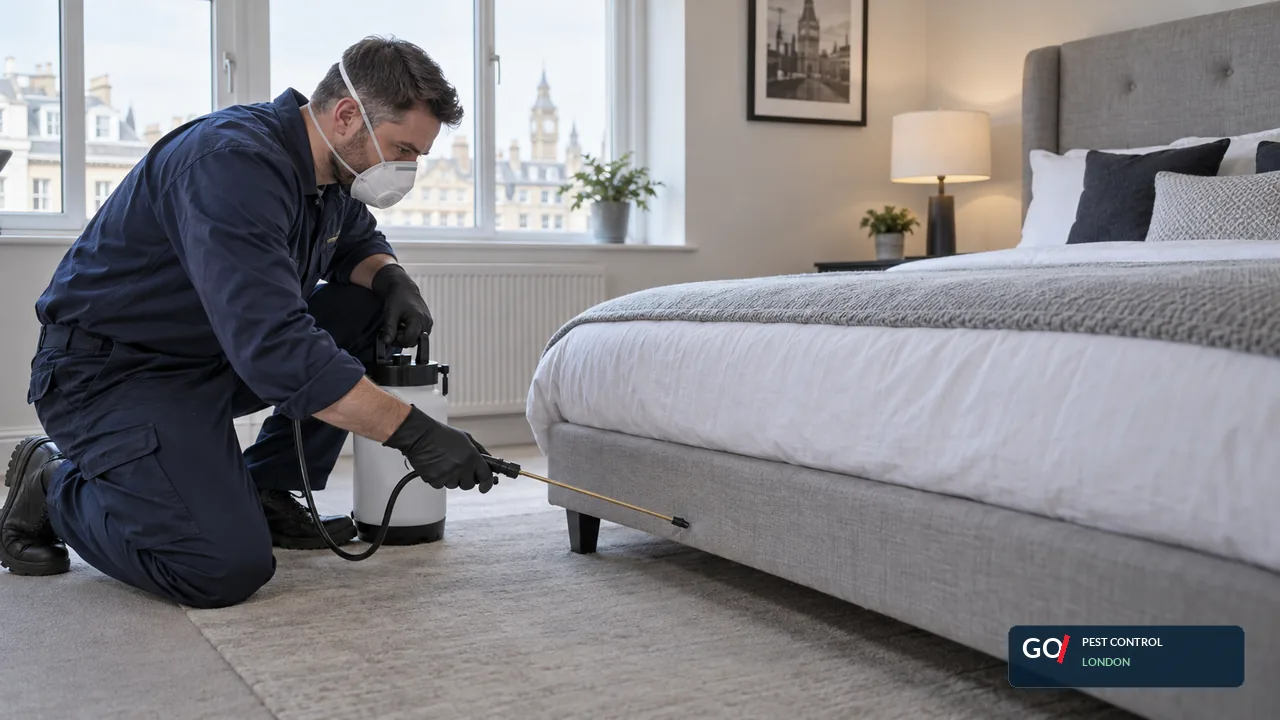
PEST PROBLEMS IN CONTEXT
A successful visit separates the active infestation from the conditions that may support it. We look for droppings, cast skins, nesting material, damage and live insects, then consider nearby gaps, leaks, storage practices or waste arrangements.
Not every contributing condition needs an expensive repair. The priority is to identify changes likely to make a measurable difference. For Greenford customers, that may mean sealing a defined opening, changing how one storage zone is managed or arranging a targeted follow-up rather than attempting a wholesale refurbishment.

RELEVANT SERVICES
Identification comes first because preparation, treatment and follow-up differ by species and setting.
Survey-led deterrence and exclusion appropriate to the species and structure.
Assessment of nest position and safe treatment or removal when the circumstances allow.
Identification and treatment that considers trails, nesting points and food sources.
Careful inspection, room-specific preparation and treatment planned around the life cycle.
Source investigation for breeding material, hygiene pressure and structural access.
A coordinated plan for floors, furnishings and pet-related sources of reinfestation.
FROM FIRST CALL TO FOLLOW-UP
We ask about timing, location, damage and previous treatment so the appointment is directed towards the most useful evidence.
Access, likely treatment areas and responsibilities are agreed before work begins, particularly in rented or managed premises.
Treatment is confined to relevant areas and selected with the occupants, building use and pest behaviour in mind.
We explain the signs of improvement, what should remain in place and when new evidence should be reported.
A USEFUL VISIT
A small production kitchen finding stored-product moths needs the report to be tested against the premises. The next step depends upon affected ingredients, batch locations and flight around shelving. An evidence-based answer keeps visible symptoms from being treated while concealed harbourage, a structural route or an unrelated cause is missed. In advance, write down each observation by room and time rather than combined into a general report.
A sound inspection depends on permission and safe reach. Here, stock decisions must follow the business's food-safety procedure. The proportionate course is to retain specimens, isolate suspect goods and inspect unopened stock without applying pesticide to food. If a linked space is outside the customer's control, the findings should explain why access matters so that an owner, manager or neighbouring occupier can make an informed decision.
The next step must be traceable to the evidence. In this situation we would retain specimens, isolate suspect goods and inspect unopened stock without applying pesticide to food. Monitoring or repeat inspection may be more useful than adding product, particularly where access was partial or activity intermittent. Any control is documented and kept away from foreseeable contact by children, pets, staff or the public.
Effective prevention begins with what inspection proved. A sensible next step is to strengthen intake checks, rotation and cleaning beneath fixed racks, with monitoring recorded by date. Broad instructions to “keep clean” do not identify the action that matters; the customer needs to know which gap, food source, moisture problem or working routine matters in this property. The follow-up baseline begins once historic marks are safely recorded and cleared. The customer can then judge progress without treating each later mark as proof of recurrence.

INSPECTION & TREATMENT
During a Greenford visit, the technician compares the reported activity with physical evidence. Inspection may include edges, voids, service routes, storage, external elevations or furniture, depending on the pest and safe access. The aim is to define the active area before choosing a method.
Treatment can involve secured bait, traps, monitors, targeted insecticide, nest work, physical removal or proofing. These tools are not interchangeable. We select only what fits the identified pest, the building and the people using the Greenford property, then explain preparation and aftercare.
Review points are agreed where the life cycle or movement pattern makes them useful. We assess change using sightings, catches, consumption, fresh droppings or other relevant evidence. A follow-up is not treated as an automatic repeat of the first visit; it responds to what has changed.
CLEAR QUOTES
The quotation for a Greenford property reflects the confirmed pest, affected areas, access, preparation, treatment method and useful follow-up. We explain the scope and total cost before work is authorised; no vague package is substituted for an inspection-led plan.
HOMES & WORKPLACES
We plan around normal household use and explain precautions for children, pets, bedrooms, kitchens and stored belongings where relevant.
We can record evidence within the authorised area and explain when adjoining spaces or common parts may also need attention.
Discreet scheduling, clear access and concise findings help businesses respond without unnecessary interruption.
PREVENTION & PROOFING
After treatment in Greenford, the most useful changes are the ones connected to confirmed activity. That can include sealing a pipe opening, improving one bin or storage area, repairing a vent screen or keeping a monitoring point accessible. We explain the reason for each recommendation and which action should come first.
We distinguish confirmed signs from possible routes before recommending work.
Preparation, safety and aftercare are explained in practical British English.
Appointments are planned carefully for occupied homes and customer-facing premises.
Treatment is chosen for the pest, building and people using the space.
Recommendations concentrate on repairs and routines that can affect the outcome.
Urgent circumstances can be discussed before a suitable visit is arranged.
CUSTOMER QUESTIONS
Practical answers about access, identification, preparation, treatment, safety and cost.
A clear photograph can narrow the possibilities, but scale and context matter. For Greenford enquiries we may ask where the specimen or damage was found and confirm identification during inspection before treatment.
Not always. It depends on the pest, product, treated area and people or animals present. We provide specific safety instructions before work begins rather than applying one rule to every Greenford appointment.
Yes, where access is authorised. We will also explain if evidence suggests that a common part or adjoining space could be contributing, because treating one unit cannot resolve inaccessible harbourage elsewhere.
Availability varies with location, access, pest type and time of day. Telephone support is available 24/7, and we offer the earliest suitable appointment without promising a time that cannot be kept.
Some isolated problems can be completed in one visit. Rodent monitoring and insects with concealed stages often need review. Your quotation states the expected visits and what would justify further work.
Keep evidence such as droppings or damaged packaging available where safe, avoid moving infested items between rooms and tell us about previous treatments. We will provide pest-specific preparation for the Greenford property.
Methods are selected with occupants in mind. We explain exclusion periods, protected areas and any steps for pets, aquariums or children before applying a treatment.
The price reflects the pest, affected area, access, preparation, method and likely follow-up. We confirm the proposed scope and cost before treatment begins.
NEARBY COVERAGE
Tell us what you have noticed at the Greenford property. We will ask the relevant questions and explain the safest, most useful next step.