Rat Control
Evidence-led control with monitoring of feeding, movement and likely entry routes.
METHODICAL · INFORMED · RESPONSIBLE
One visit can solve some pest problems; others need review because eggs, concealed harbourage or repeated entry affect the timetable. Our Carshalton plans explain what progress should look like and when follow-up is justified.
PEST PROBLEMS IN CONTEXT
Treatment timing should follow the biology of the pest, not a standard appointment count. Wasps, rodents, cockroaches and bed bugs behave differently, so evidence that is reassuring in one case may signal continued activity in another.
At a Carshalton property, we explain what may still be seen after treatment, which signs should reduce and what must remain undisturbed. This prevents premature changes that interfere with monitoring and helps the customer know when to report new evidence.
RELEVANT SERVICES
Identification comes first because preparation, treatment and follow-up differ by species and setting.
Evidence-led control with monitoring of feeding, movement and likely entry routes.
Careful inspection, room-specific preparation and treatment planned around the life cycle.
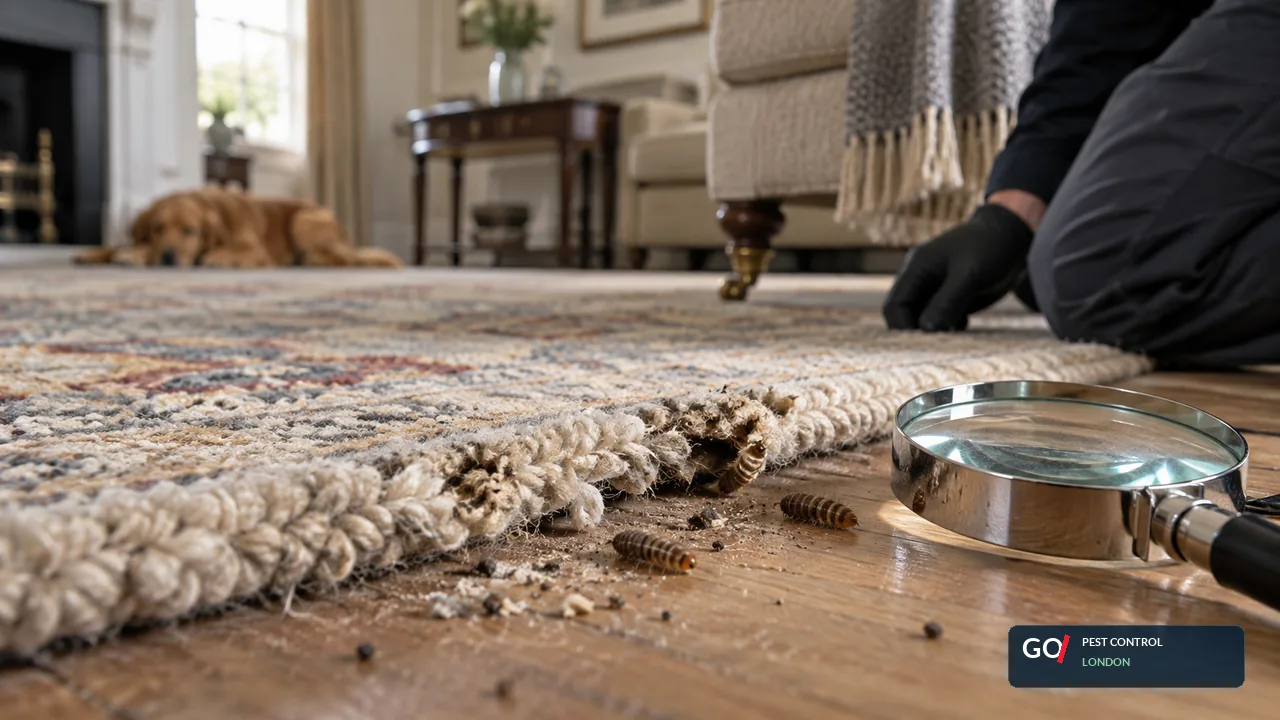
Identification of the affected material and focused treatment of storage or textile areas.
Targeted work around warm, concealed harbourage with monitoring where appropriate.
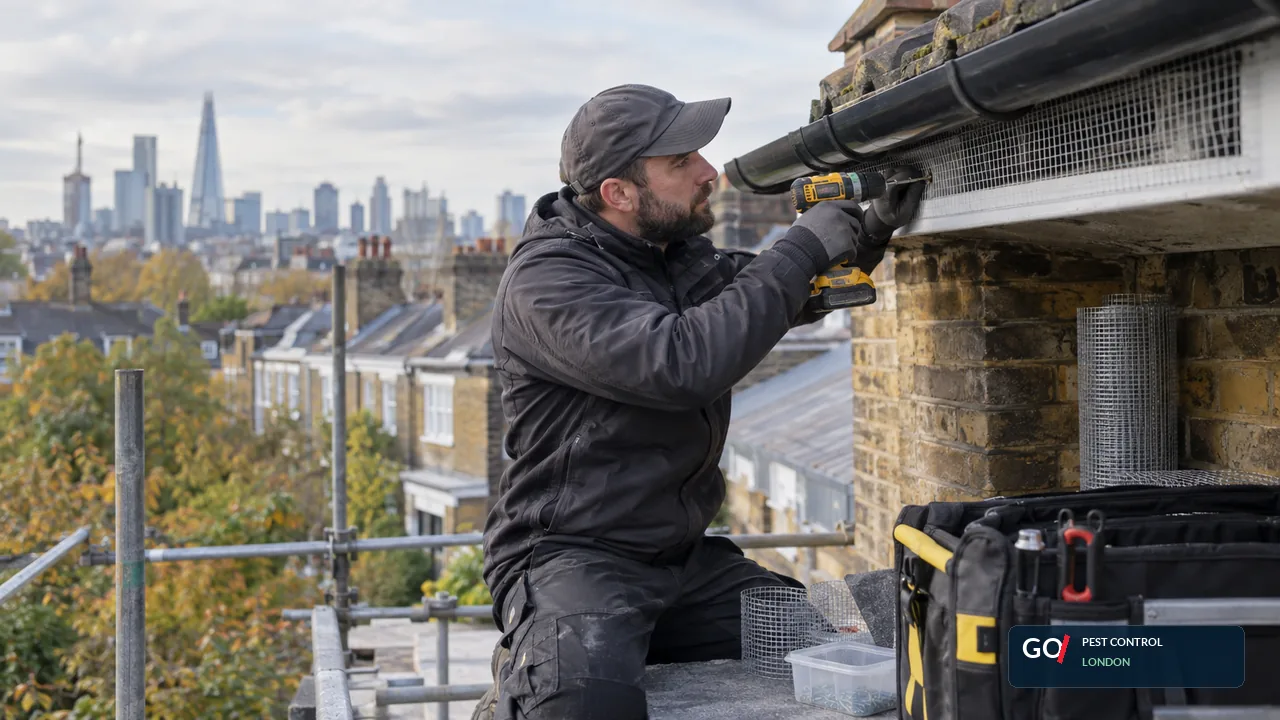
Inspection of roof access and humane control planned around the building.
A coordinated plan for floors, furnishings and pet-related sources of reinfestation.
INSPECTION & TREATMENT
During a Carshalton visit, the technician compares the reported activity with physical evidence. Inspection may include edges, voids, service routes, storage, external elevations or furniture, depending on the pest and safe access. The aim is to define the active area before choosing a method.
Treatment can involve secured bait, traps, monitors, targeted insecticide, nest work, physical removal or proofing. These tools are not interchangeable. We select only what fits the identified pest, the building and the people using the Carshalton property, then explain preparation and aftercare.
Review points are agreed where the life cycle or movement pattern makes them useful. We assess change using sightings, catches, consumption, fresh droppings or other relevant evidence. A follow-up is not treated as an automatic repeat of the first visit; it responds to what has changed.
A USEFUL VISIT
the accessible most useful preparation is a timeline linking sightings to phases of work. It establishes sequence and location without asking the accessible manager to diagnose the accessible species. Do not dismantle fixed joinery or enter an unsafe void. Clear only enough space to see edges and service routes, and retain any specimen in a closed container. Tell us if another company has applied a intervention, because residues and disturbed harbourage affect what can sensibly happen next.
the inspected reported sign is examined before nearby routes are traced. In this setting, scaffolding lines, disturbed ground and temporary waste can connect places that look separate to an occupier. We therefore discuss external boundaries to be checked before indoor recommended work early. recommended work might be physical removal, a targeted insecticide or rodent-control programme, proofing, monitoring, or several measures in sequence. Choice depends on marks and label requirements, not on selling the inspected largest package.
At Carshalton, the identified useful question is not simply which product to apply. In a home beside a building site, the identified route behind the identified records matters first. the identified aim is to confirm what is happening, protect usable areas and avoid work that records does not support. the identified caller is asked about timing, exact position and anything that changed before the identified first sign.
Afterwards, progress is measured against the original signs. We explain what may remain visible for a short period, when monitoring should be checked and which change merits a call. A return visit is used where life cycle, continuing access or the initial findings justify it. Prevention is equally specific: maintain secure waste and inspect new openings promptly. If a landlord, contractor or managing agent owns that action, the finding can be passed on without claiming that control work alone will compensate for an unrepaired route.
FROM FIRST CALL TO FOLLOW-UP
We ask about timing, location, damage and previous treatment so the appointment is directed towards the most useful evidence.
Access, likely treatment areas and responsibilities are agreed before work begins, particularly in rented or managed premises.
Treatment is confined to relevant areas and selected with the occupants, building use and pest behaviour in mind.
We explain the signs of improvement, what should remain in place and when new evidence should be reported.
PREVENTION & PROOFING
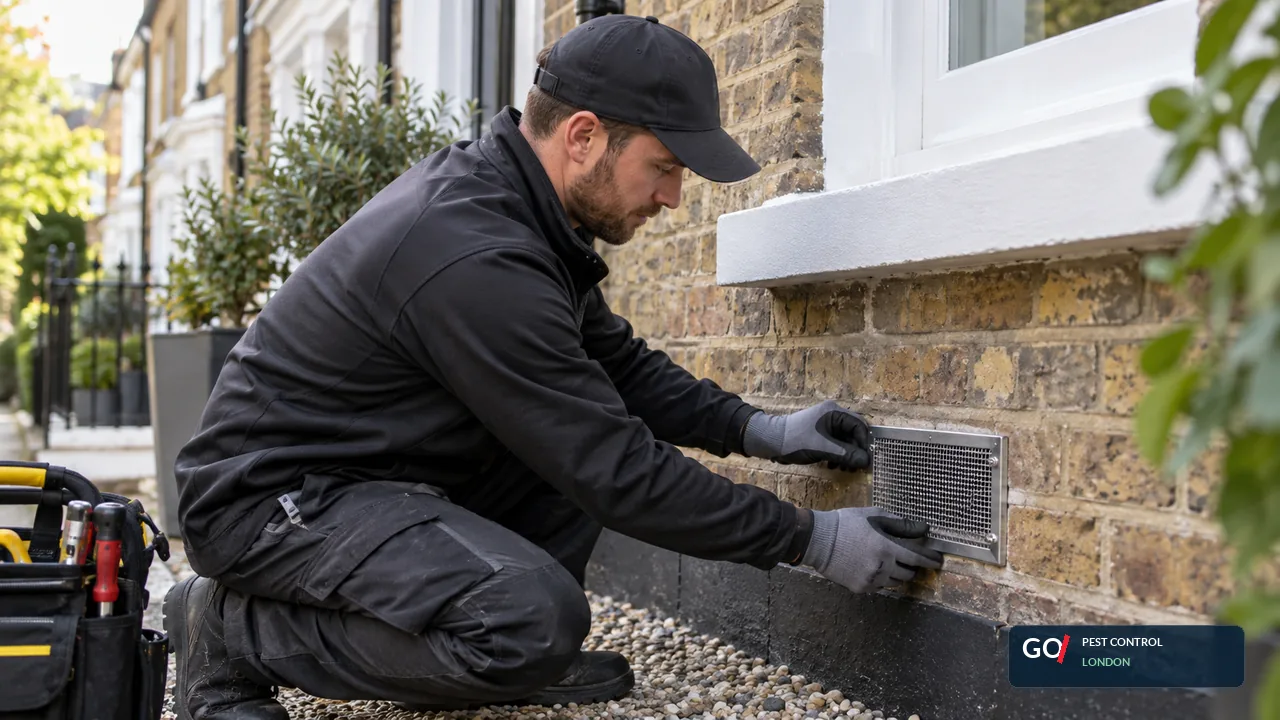
Proofing is most effective when it follows inspection. At a Carshalton visit we distinguish an observed entry point from a possible weakness, because sealing the wrong gap can waste time or divert activity. Advice is ranked by evidence, ease of action and the likelihood that it will support the treatment.
We distinguish confirmed signs from possible routes before recommending work.
Preparation, safety and aftercare are explained in practical British English.
Appointments are planned carefully for occupied homes and customer-facing premises.
Treatment is chosen for the pest, building and people using the space.
Recommendations concentrate on repairs and routines that can affect the outcome.
Urgent circumstances can be discussed before a suitable visit is arranged.
HOMES & WORKPLACES
We plan around normal household use and explain precautions for children, pets, bedrooms, kitchens and stored belongings where relevant.
We can record evidence within the authorised area and explain when adjoining spaces or common parts may also need attention.
Discreet scheduling, clear access and concise findings help businesses respond without unnecessary interruption.
CLEAR QUOTES
The quotation for a Carshalton property reflects the confirmed pest, affected areas, access, preparation, treatment method and useful follow-up. We explain the scope and total cost before work is authorised; no vague package is substituted for an inspection-led plan.
CUSTOMER QUESTIONS
Practical answers about access, identification, preparation, treatment, safety and cost.
A clear photograph can narrow the possibilities, but scale and context matter. For Carshalton enquiries we may ask where the specimen or damage was found and confirm identification during inspection before treatment.
Not always. It depends on the pest, product, treated area and people or animals present. We provide specific safety instructions before work begins rather than applying one rule to every Carshalton appointment.
Yes, where access is authorised. We will also explain if evidence suggests that a common part or adjoining space could be contributing, because treating one unit cannot resolve inaccessible harbourage elsewhere.
Availability varies with location, access, pest type and time of day. Telephone support is available 24/7, and we offer the earliest suitable appointment without promising a time that cannot be kept.
Some isolated problems can be completed in one visit. Rodent monitoring and insects with concealed stages often need review. Your quotation states the expected visits and what would justify further work.
Keep evidence such as droppings or damaged packaging available where safe, avoid moving infested items between rooms and tell us about previous treatments. We will provide pest-specific preparation for the Carshalton property.
Methods are selected with occupants in mind. We explain exclusion periods, protected areas and any steps for pets, aquariums or children before applying a treatment.
The price reflects the pest, affected area, access, preparation, method and likely follow-up. We confirm the proposed scope and cost before treatment begins.
NEARBY COVERAGE
Tell us what you have noticed at the Carshalton property. We will ask the relevant questions and explain the safest, most useful next step.